Disclosure: This post may contain affiliate links, meaning if you decide to make a purchase via my links, I may earn a commission at no additional cost to you. See my disclosure for more info.
Food spending is one of the easiest areas to adjust when trying to balance your budget. If you want to save money, start by looking for ways to cut grocery costs. You probably can’t negotiate your rent/mortgage or car payment downward, but you can find wiggle room in your food bill. According to the U.S. Department of Agriculture, nearly one-third (32.7%) of our food dollars go toward meals prepared elsewhere.
Life Hacks Coming Up

“Save money on groceries” advice isn’t one-size-fits-all. For example, not everyone lives near a warehouse store like Costco (and some people can’t afford the annual fee anyway). Apartment dwellers can’t grow gardens, and folks without vehicles can’t visit you-pick farms. And so on. Fortunately, plenty of other ways exist to keep food prices as low as possible. Use some (or all!) of the following hacks to eat well without breaking the budget.
Look For “Manager’s Specials”

We are not talking about store-wide sales here. No, these items are close-dated or otherwise no longer welcome at the grocery. You’ll generally save 50% and sometimes more. My partner and I look for manager’s specials when we get to the store since it’s first-come, first-served. Close-dated meat and dairy items need to be used or frozen quickly, of course. I grab half-price milk whenever I see it in making yogurt, but milk can also be frozen. Ask the dairy and meat departments at what time(s) of the day these marked-down products are put out. Our best finds lately were lean pork loin for less than 40 cents per pound and boxes of breakfast sausages for 18 cents a pound. It’s deals like those that make us glad we have a chest freezer.
Look for the Discounts

Some managers’ specials are discounted for other reasons, such as holiday items, and there’s no longer a market for canned pumpkin or chocolate bunnies. Some products didn’t sell well, so the manager wants them gone. That’s how I scored a dozen boxes of mango-flavored gelatin for practically nothing. (Partner and I prepared some of it with apple juice instead of cold water and called it “mangle” Jello. Yep, we’re easily amused.) They’re slightly damaged: boxes with torn or crushed corners or cans with dents. Recently, I found several giant cans of pickled jalapenos for 29 cents each, in cans whose dents were barely noticeable. (Note: According to the USDA, you shouldn’t buy a can that has visible holes or punctures; is swollen, leaking, or rust; is crushed/poorly dented enough to prevent normal stacking or opening with a manual can opener; or has a dent so deep you can lay your finger into it.)
Some People Will Give You Food

A nonprofit called the Buy Nothing Project invented a genius tool for meeting your needs free of charge. It’s called the Buy Nothing Facebook group, and it exists solely to get people to “give where they live.” You can get (or give) stuff like clothes, furniture, appliances, toys, books, and food. I’ve gotten a ton of good food items this way, from fresh produce to canned goods. Use this tool to look for a group in your area. And if there’s a chapter of The Freecycle Network in your area, watch for food listings. This could be anything from “We’re moving and don’t want to bring the canned goods” or “My plum tree has gone mad – come get some fruit.” You could also request (“Seeking surplus produce”) because some local gardeners would probably be glad to have someone use up all that zucchini. Craigslist sometimes has “free food” ads as well.
Check Out So-Called “Ethnic” Markets

Even if you’re not interested in Asian or Latino cooking, you will likely find lower prices on things you eat at stores catering to these groups. When I wrote about this for MSN Money, the prices were sometimes startling. For example, the chicken drumsticks were $1.40 less per pound than at a nearby supermarket; name-brand pasta was $1.20 cheaper, a 10-pound bag of potatoes was $2 less, and canned beans were 60 cents less. You can also get big bags (10 pounds or more) of dry beans and rice at prices noticeably cheaper than the per-pound price at supermarkets – without needing to join a warehouse club.
Restaurant Supply Stores

This is another excellent place to buy large quantities of canned, fresh, and frozen items without paying a warehouse club fee. Although such sites cater mainly to the restaurant trade, some will allow members of the public to buy there as well. Ask!
Find Free Produce

Gleaning is a thing! Nonprofits are networking to devise ways to avoid food waste, such as making lists of where you can pick (or pick up) produce for free. Search for “gleaning programs [your city],” or visit sites like:
- Fallen Fruit compiles maps of fruits and nuts in the Los Angeles area
- Falling Fruit maps gleanable produce and links to organizations that distribute food.
- Portland (Oregon) Fruit Tree Project
- Urban Food Forestry links to U.S., Canada, and the United Kingdom harvest initiatives.
- Village Harvest lists gleaning programs in 12 U.S. states and one Canadian province.
Or Try It This Way

Next time you see fruit or berries going to waste in someone’s yard, leave a note asking if you might be allowed to have some. You could also watch for raspberries that have jumped the fence and are spreading along the bike path. Similar to gleaning is….
Foraging: Be a Hunter-Gatherer!
Wild greens, nuts, berries, fruits, and mushrooms might grow in public spaces (or your backyard). Before I go any further, let me stress how essential it is that you know exactly what you’re picking and eating. The wrong stuff can make you sick or even make you dead. Start by looking for groups that focus on harvesting nature’s bounty, such as mycology fans who organize mushroom walks or a college- or parks-affiliated program about wild greens you can eat. A field guide to local wild foods, with color illustrations, is also a good idea; look for one in the library. Make sure to forage legally. Get permission to visit someone else’s property, and find out whether food-gathering on public lands is allowed.
Visit the Farmers Market
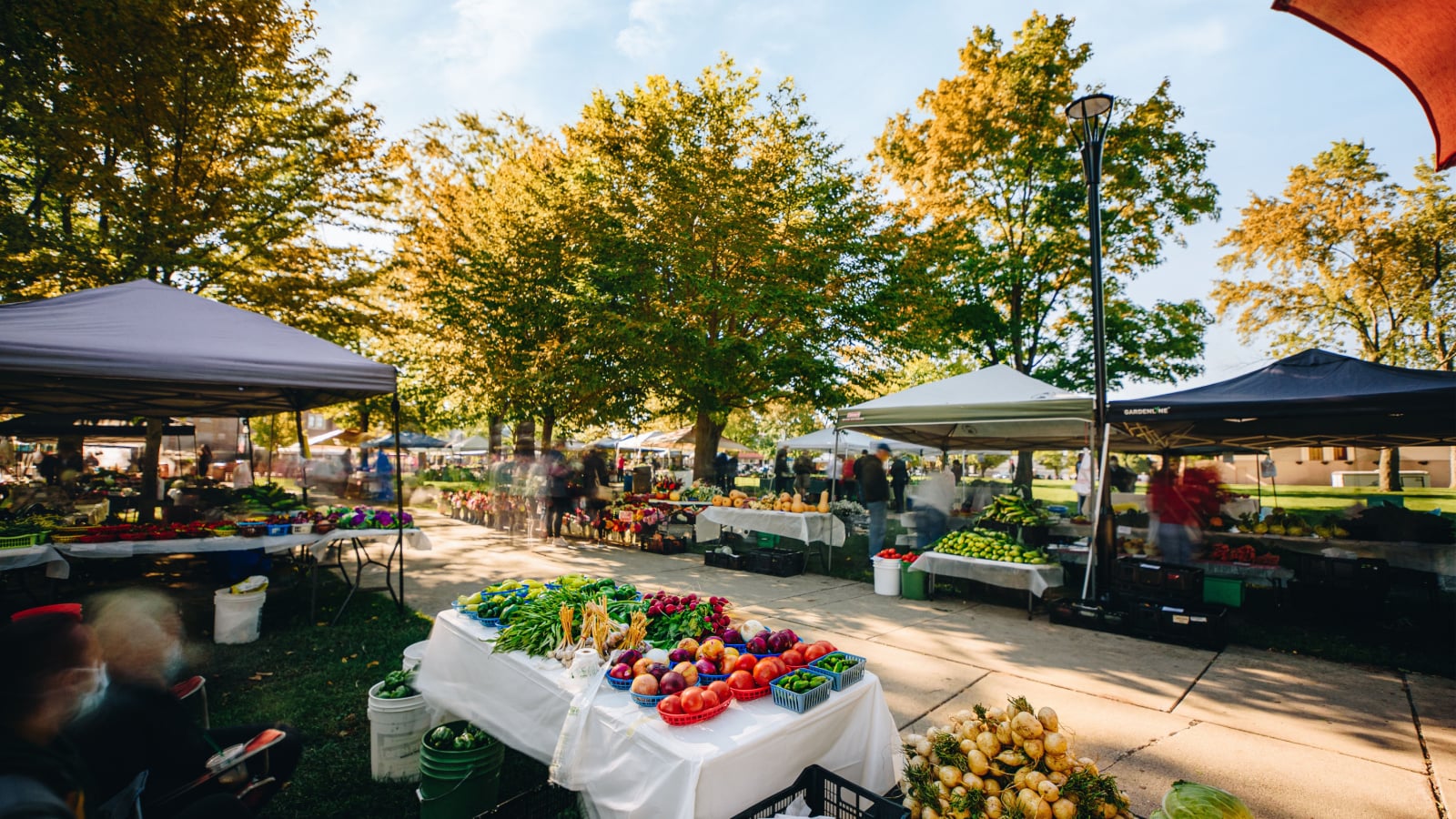
Not necessarily to buy produce because that stuff can get pretty pricey. Instead, you’ll be looking for stalls that sell trimmed beets or turnips and asking politely if you could have the greens they just cut off. Sauté them with olive oil and garlic, or chop them and add them to soups, stews, or curry. (The produce manager at the supermarket might also be able to help you out here.)
Another Potential Hack

Find a farmers market seller who looks tired and offers to help set up and tear down every market day. Ask to be “paid” for slightly irregular items, like overly bulbous tomatoes or squash with a couple of divots in its rind. It’s not about outward appearances but the way the food tastes.
Check Out the Bakery Outlet

What’s the difference between five-day-before-sell-by-date bread from the outlet store and the same bread with the same date in a supermarket? The price: You can save up to 75% on sandwich slices and bagels, hot dog and hamburger buns, tortillas, rolls, snack cakes, and doughnuts. Sometimes, the deals are ridiculous. My partner brought home an entire case of corn tortillas for $1. Stashed in the freezer, they fed us for many a Taco Tuesday. These sites will help you find outlets in your area:
- Aunt Millie’s
- Bimbo Bakeries USA
- Franz
- Holsum
- Oroweat
- Pepperidge Farms
- Schwebel’s
Check the links for outlets near you, and also search for “bakery outlet [your city]” because regional bakeries sometimes have second-run locations. Ask about special programs, such as loyalty cards or senior discounts.
Shop the Office Potluck

Any time there’s a workplace party, offer to help clean up. Announce that food waste makes you sad so that you will bring some of the leftovers home. Let the people who cooked or purchased the grub first dibs, then start packaging. On the day of the potluck, you should bring containers, foil, or bags (or all three) to get the food home. Bring at least one giant container or kitchen trashcan-sized garbage bag if you know there will be a turkey or ham. If you take what’s left of the ham, let someone else bid on the turkey carcass (although in a perfect world, you’d get both). Use your funds wisely. Meat left on the turkey makes a good dinner, and odd bits are fine for turkey salad, turkey a la king, turkey tetrazzini, or any other recipe that stretches small pieces of meat. What’s left of the bird can be simmered for soup stock. A ham bone with some meat makes a great bean or lentil soup pot. If no one else wants the fruit and veggie trays, grab them; you could freeze them for smoothies and turn them into soup.
Generic/Private Label/Store Brand Products

They cost up to 30% less than name-brand items. In my experience, they don’t all work out – I still wake up screaming about ultra-cheap mayonnaise. But things like Kroger lentils, Safeway canned tomatoes, and Albertson’s pasta taste like the name brands, and the cumulative savings are considerable.
Estate Sales

It sounds odd, but hear me out. I’ve scored some fantastic deals on canned goods and cake mixes. After all, they’re trying to sell everything, including the contents of the cupboards. You might also look into foil, wraps, cleaning supplies, and non-food items. And if the idea of somebody’s “old” food creeps you out? Consider two cans of soup with sell-by dates two years in the future. Does it matter whether you bought the can from a supermarket or an estate sale?
Scratch-And-Dent Markets
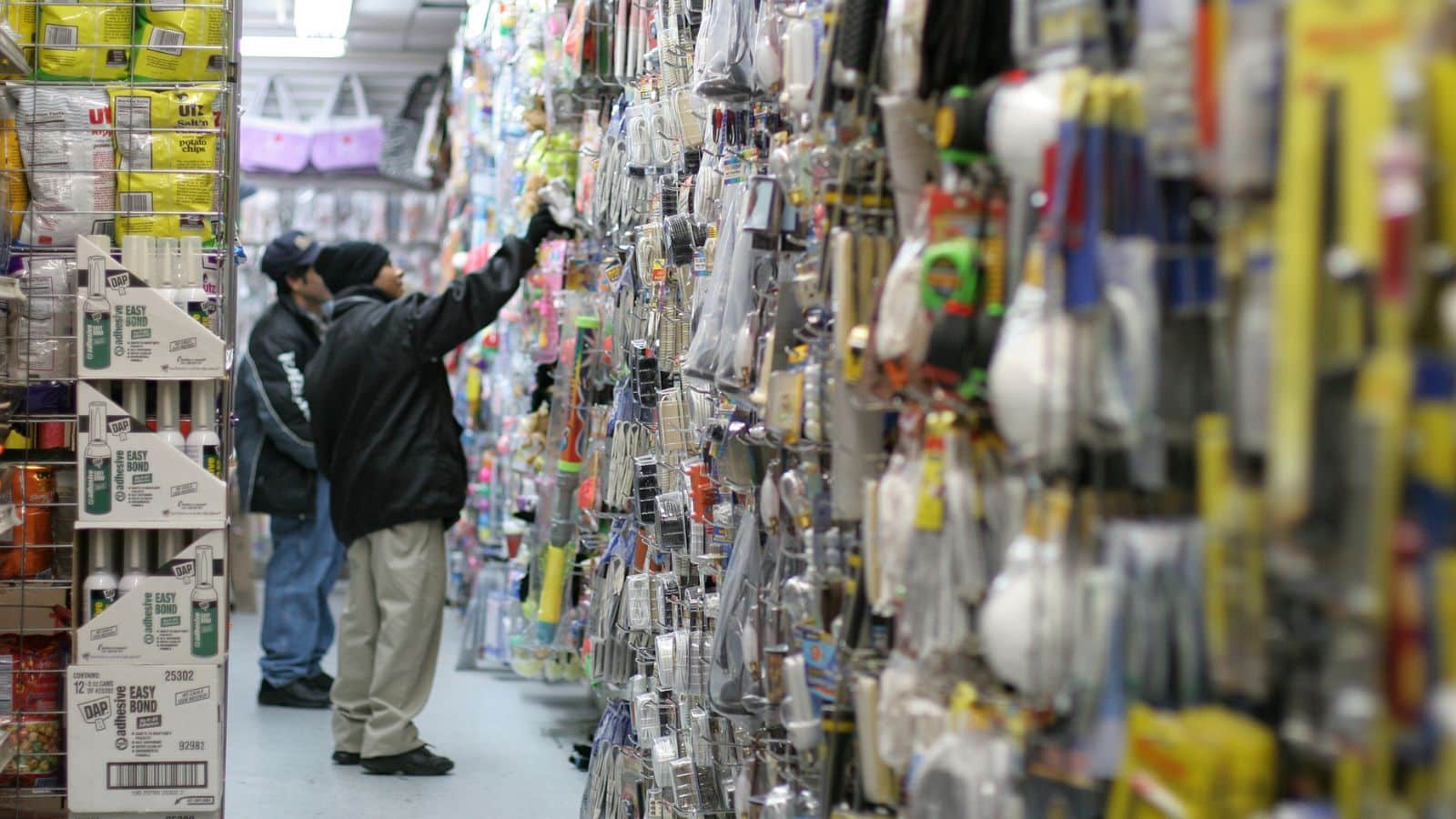
Also known as “salvage groceries,” these products may not even be noticeably damaged. For example, if a pallet of creamed corn falls off the forklift, selling the whole thing as dented is more cost-effective than opening up, sorting, and repackaging the goods. Look for the best deals on things you use the most often, such as pasta and canned goods, and shine on the stuff that’s not a good use of your food dollars. Be sure to factor in the time/gas it takes to get there, too; a 30-mile round trip to score dented gingerbread house kits isn’t worth it. A site called Extreme Bargains maintains a state-by-state list of salvage grocers. (Scroll down the page a bit to find it.) Since it may not include every scratch-and-dent store out there, you should also do an online search for “salvage grocers (or “discount grocers”) [your city].”
One More Thing

If you find a product that thrills you, buy as many as you can afford because what you see could be all the store has. These deals generally don’t repeat.
Little Free Food Pantries

Maybe you’ve seen Little Free Libraries in your neighborhood, full of free books? The Little Free Food Pantry movement operates along the same lines. But inside these small boxes are shelf-stable food items, pet supplies, and toiletries. Since they are “open” 24/7, you can check in early or late at night if you don’t want anyone to see you. These two sources can help you look for pantries in your area. It’s also a good idea to Google “little free pantry in (your city)” since some pantries exist independently without being linked to the clearinghouses. Good luck!
Modified Freeganism

Plenty of still-good food gets dumped by retailers, a colossal waste. Folks who call themselves “freegans” get the food out of the trash, inspect it, and eat/share what’s still good. While I can’t exactly tell you to risk hurting yourself by dropping down into a Dumpster, I will say this: If you know anyone who works at a restaurant, supermarket, or produce stand, ask when these foods get dumped out. You might be able to intercept them, especially if your buddy happens to be tying his shoe (wink wink) at the time. It’s a long shot. But you might get lucky.
Avoid These 19 Pointless Expenses When Living Paycheck to Paycheck

Living from paycheck to paycheck puts one in a dangerous financial bind. It’s more prevalent than you can imagine. According to a survey by CNBC, more than half of all Americans (58%) live paycheck to paycheck. When money is tight, it’s crucial to pinpoint and cut out wasteful expenditures that eat away at your hard-earned savings.
Avoid These 19 Pointless Expenses When Living Paycheck to Paycheck
12 Keys to Embracing a Frugal Lifestyle

To some, living a frugal lifestyle might be sessions of extreme couponing. For others, never paying full price for anything could be a commitment. But what does it mean to live a frugal lifestyle? Are there general rules to follow, or is there an assortment of ideas you cherry-pick from? The first step is to understand what living frugally really means.