
Disclosure: This post may contain affiliate links, meaning if you decide to make a purchase via my links, I may earn a commission at no additional cost to you. See my disclosure for more info.
Did you know meat is the most expensive food group? In our household, vegan and vegetarian diets are non-existent, with meat frequently taking precedence over veggies and whole grains in our dinners. That means a substantial portion of our grocery costs go towards meat, leaving less for other necessary food items.
Through trial and error, I’ve encountered costly blunders, like opting for pre-cubed stew meat or frozen fish sticks for convenience. Overpaying for pork chops and succumbing to freezer burn on quality cuts have also been regrettable experiences. Despite these setbacks, I’ve learned many valuable lessons and compiled them in this guide on smarter meat spending. Here are 21 of my favorite tricks for saving money on meat at the grocery store.
1. Plan Meals Around Meat That’s on Sale

This tip applies to saving money on groceries in general, but since meat makes up such a large percentage of our food budgets, it’s essential to put it into practice when buying meat. If you want to save money on meat, you should do what’s best for your bank balance and avoid buying meat that isn’t on sale. But that’s not how most people shop.
If the meat a recipe calls for is unavailable at a discounted price, most people buy it anyway. Cravings and impulses often win out over sensible shopping. But wouldn’t it make more sense to go with a different recipe? Perhaps one that uses meat that’s available for a lower-than-normal price? You’d trim your grocery spending that way.
Paying full price is not in your best interests when trying to save money on meat. And it’s entirely possible to make delicious, healthy meals without spending top dollar.
2. Know Your Meat Prices per Pound
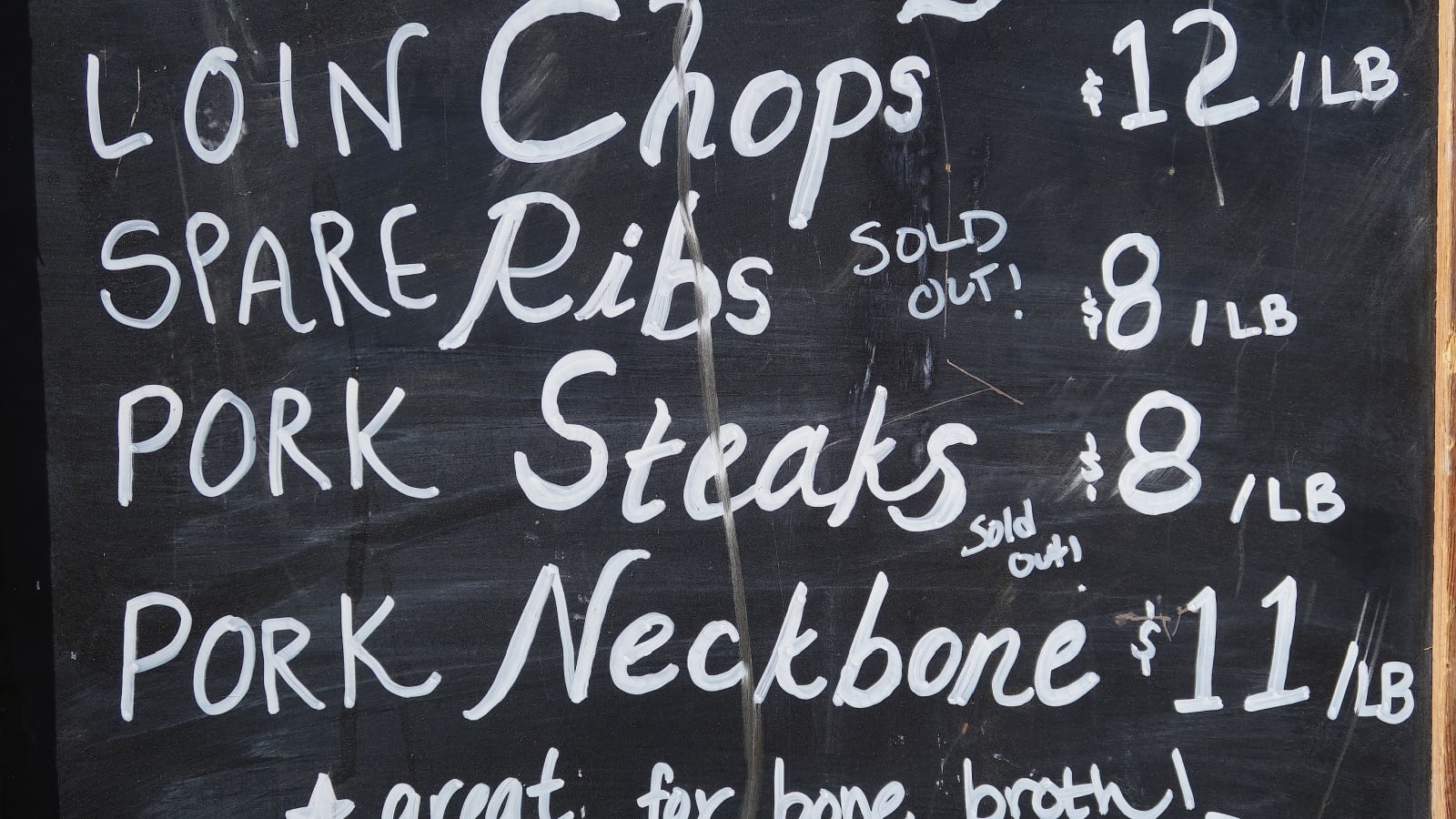
Do you know a good deal on chicken breasts or ground beef when you see one? If not, start keeping a price book until you get familiar with meat prices in your area. You can save a lot of money by knowing how much meat usually costs in your area.
Keep a grocery price book and log the price per pound of the meat you buy most often—record where you got it and when you purchased it. Ask meat department employees at your local supermarkets about sales and prices, and then write down what you find in your price book.
Log prices consistently, and soon, you’ll be able to spot pricing trends, anticipate sales, and set target prices. Before long, you’ll know when and where to buy, when a seemingly reasonable price can be beaten, and when to stock up without looking at your price book.
3. Use Coupons and Rebates When You Can

You won’t often find coupons or meat rebates, but they exist. The meat coupons and rebate offers are usually for bacon, sausage, and processed or prepared meats, but you’ll find some gems, particularly around the holidays. Butterball and Jennie-O sometimes post coupons on their sites.
Grocery rebate apps like Ibotta and Checkout 51 will have a cash-back offer or two on meat almost weekly. If you’re not using these apps to save money on groceries, you should try them. Download the app to your smartphone, purchase certain products, and scan your receipts to get cash back.
4. Stockpile Around the Holidays

The major holidays are the best time to load your freezer with turkey and ham. You’ll find the lowest prices before and after Thanksgiving, Christmas, and Easter.
If you can wait until the week after the holidays, you can take advantage of additional markdowns on leftovers. Availability and selection can be limited post-holidays, but check anyway. You can store a frozen turkey for up to 2 years, according to Butterball. I’ve never personally gone past 1, but stockpiling at the lowest possible price is a smart way to save money on meat.
5. Skip the Deli Counter

Buying lunch meat at the deli counter is expensive. You can easily spend $8 to $11 per pound for store-brand sliced ham or turkey. Right now, at my closest supermarket deli, the store brand honey ham sells for $8.79 a pound. The premium brand is $10.99 per pound. That’s way too much for lunch meat, as far as I’m concerned.
Avoiding the deli is an excellent way to save money on meat, but what if you need something quick and convenient for sandwiches? The good news is that I can stroll over to the meat department and get a big hunk or “chub” of ready-to-eat honey ham for far cheaper, on sale for $2.49 a pound. Paying so much more for sandwich meat from the deli doesn’t make sense.
Some stores will even slice the meat for you free of charge, but it’s probably going to be hit or miss. Ensure they don’t throw out the ends if you manage to get the chub sliced for you. You can chop the ends in soups, salads, omelets, and other recipes.
I’ve received a strange look or two from the folks behind the deli counter and other customers when asking to get my chub sliced. Cashiers also asked me what happened to my meat at checkout time. They don’t see it every day, so you might have some explaining to do. You’re not pulling a scam, so don’t feel weird.
Slicing it at home yourself is always an option as well. Getting uniform deli thin slices with a kitchen knife will be a challenge, though. The money you save can go toward a home food slicer. You can pick up a good quality food slicer at Amazon for around $100. Don’t buy one unless you’re sure you’ll use it often. We use ours for homemade bread and cheese as well as meat.
6. Buy Reduced Price
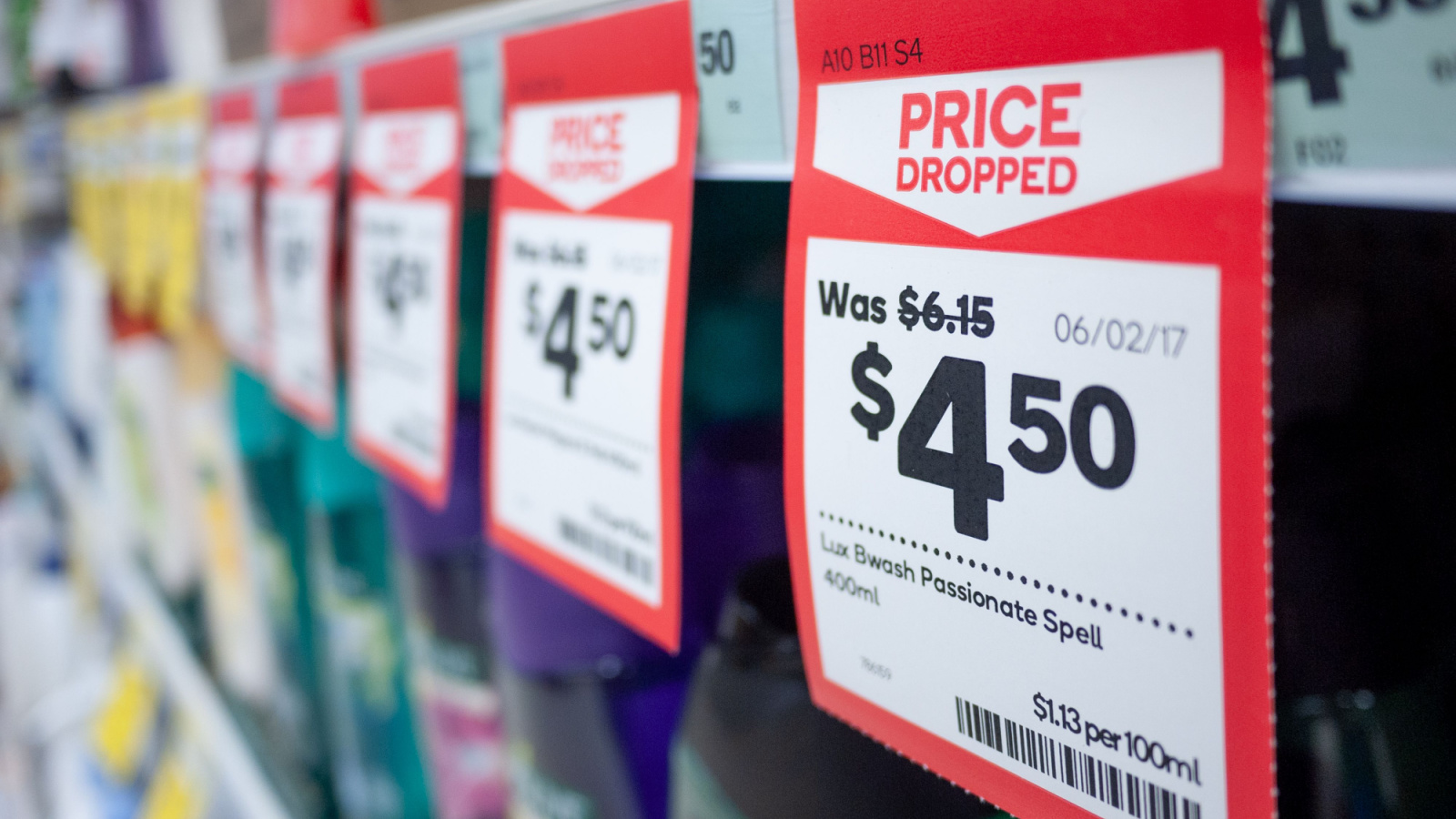
Look for markdowns. Packages of meat often get their prices slashed as the sell-by date nears. If you can cook it the day you buy it or by the date on the package, you can save a few bucks. Getting it home and freezing it right away is also an option. Just don’t let it sit in your fridge for very long.
You also need to look at more than just the price tag. Before putting that heavily marked-down package in your shopping cart, check for signs of spoilage like discoloration, foul smells, slime, or excessive blood or liquid that could harbor bacteria. Trust your eyes and your nose.
7. Buy Cheaper Cuts
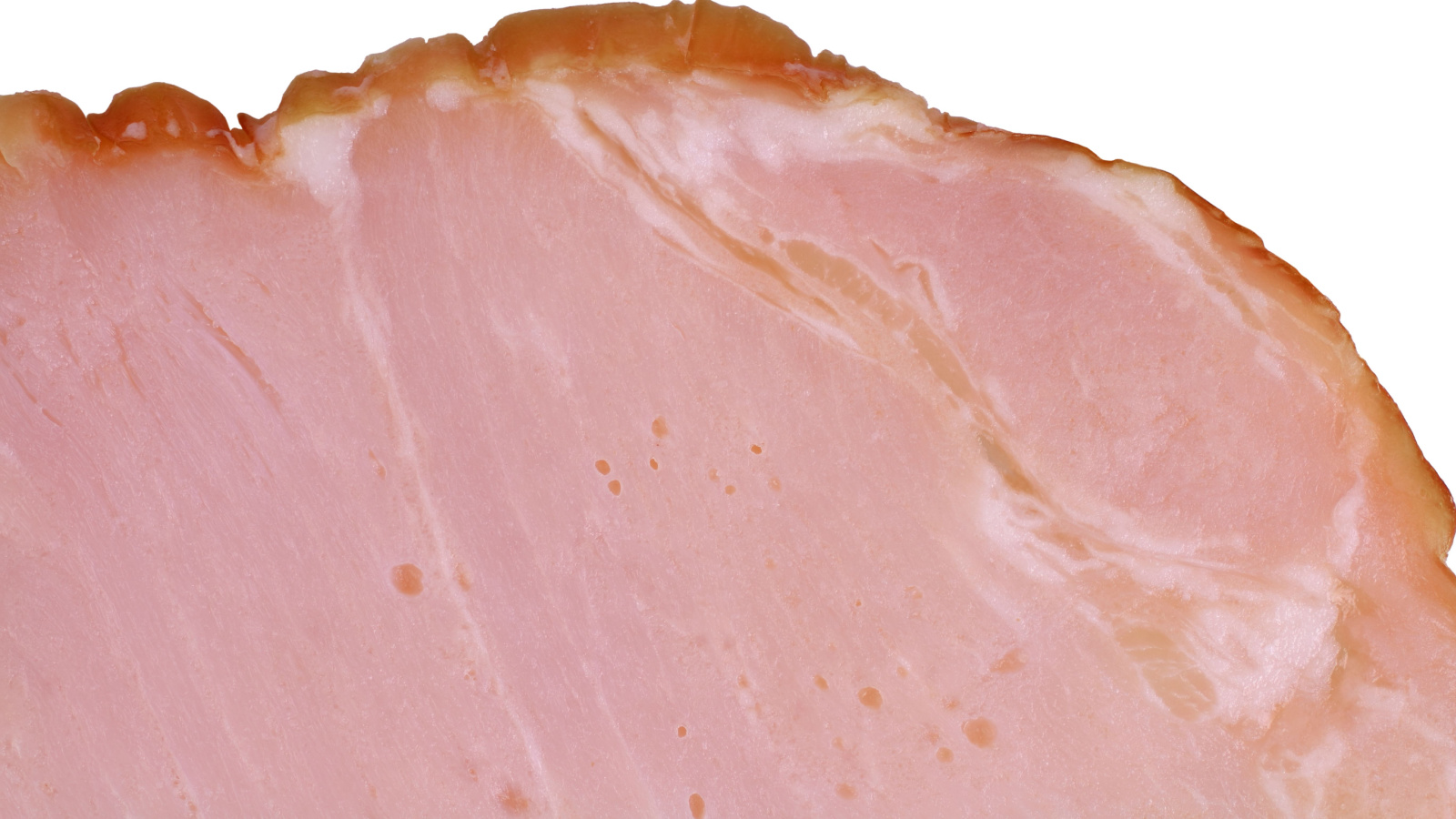
Stick to less expensive cuts instead of the popular premium cuts. To save money on meat, you should pass on sexier cuts like Porterhouse, rib eye, center-cut pork chops, and boneless, skinless chicken breast.
You might think cheap cuts result in bad meals, but it’s not true. To create tender, flavorful meat, you can tenderize, marinate, roast, braise, or slow-cook cheaper cuts. There’s no need to spend a fortune to get a great meal. You don’t have to be a professional chef either. All it takes is a little research and practice to prepare each type of meat expertly.
8. Buy Lean Cuts
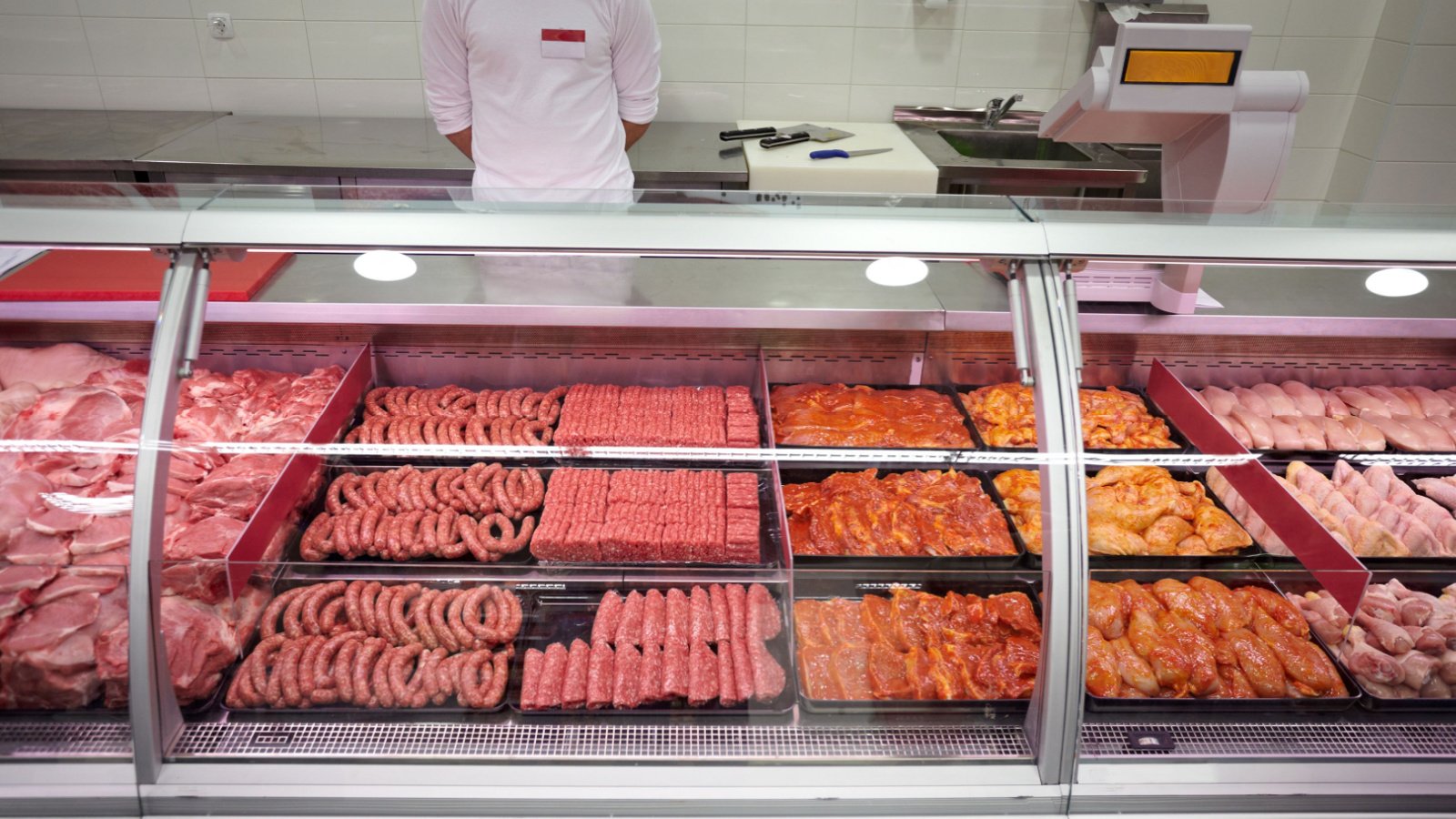
This goes hand in hand with buying cheaper cuts. Sure, the tastiest cuts usually have more fat, but they’re also usually the most expensive. You can find delicious recipes for meats like London broil and pork shoulder, so you don’t have to sacrifice taste to save money on meat.
Sometimes, leaner cuts don’t have the cheapest sticker price, but they can be a better value. Fattier cuts cook down more. Depending on the cut, you might have a cooked yield of 15-40 percent less than the raw weight. So, the cheaper 70% lean ground beef might cost a little less than the 93% upfront, but you will end up with less usable meat.
9. Buy Meat in Bulk at Warehouse Clubs and Grocery Stores
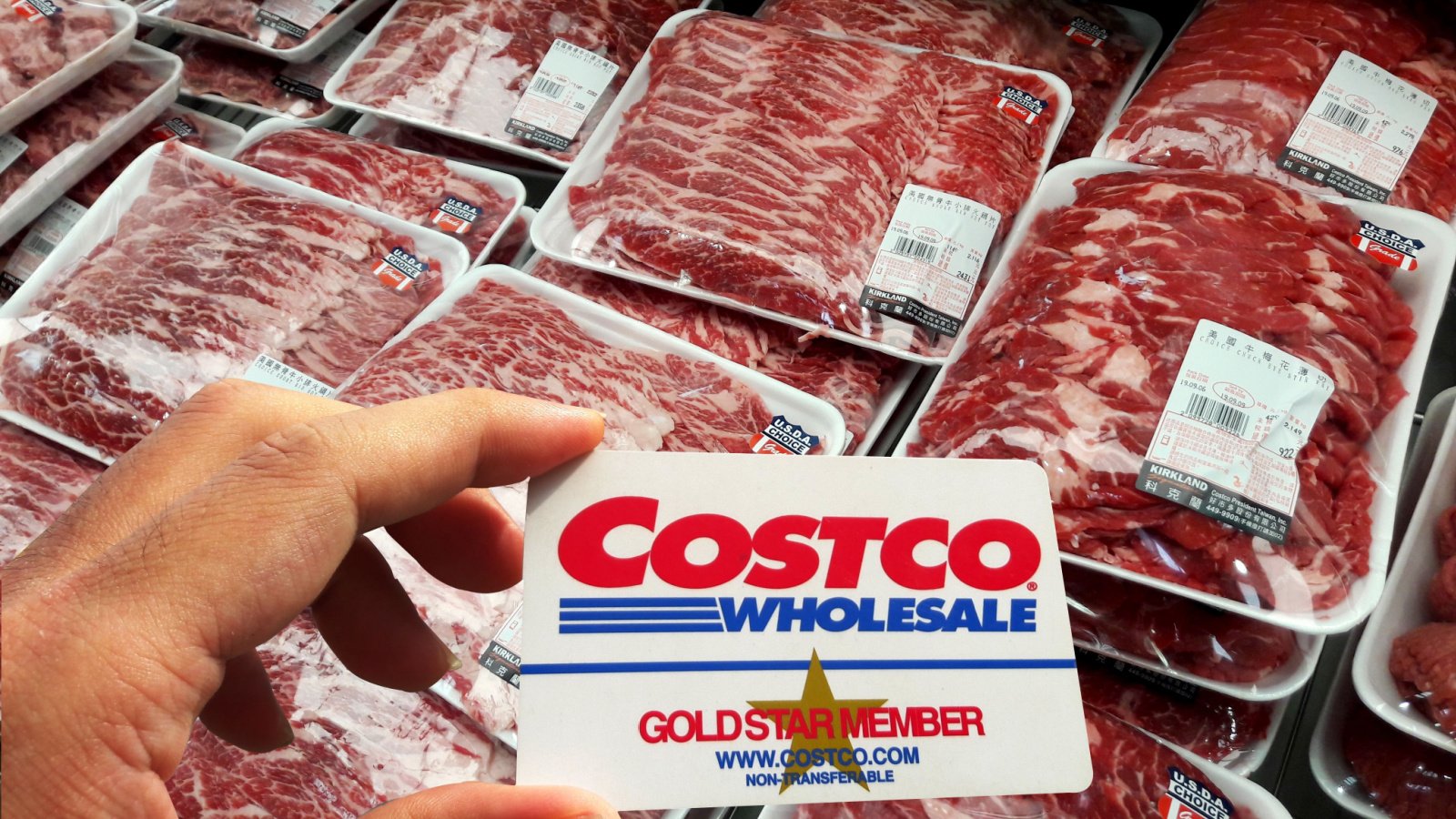
Warehouse clubs can be a great source of meat bargains. My local warehouse club sometimes has the best price on chicken thighs and lean ground beef. Their price hovers around or below local supermarket sale prices, and their quality is pretty high. I have to buy 8 or 10 pounds at a time at the warehouse club, but as long as the price per pound is right and I have enough freezer space available, I’ll occasionally get meats there.
At the supermarket, family-size packages almost always cost less per pound than smaller packages. The difference usually works out to somewhere between 50 and 75 cents per pound when you buy 3 pounds or more where I live. You can always get it home and divide it into smaller portions for cooking or freezing.
10. Buy Meat Wholesale
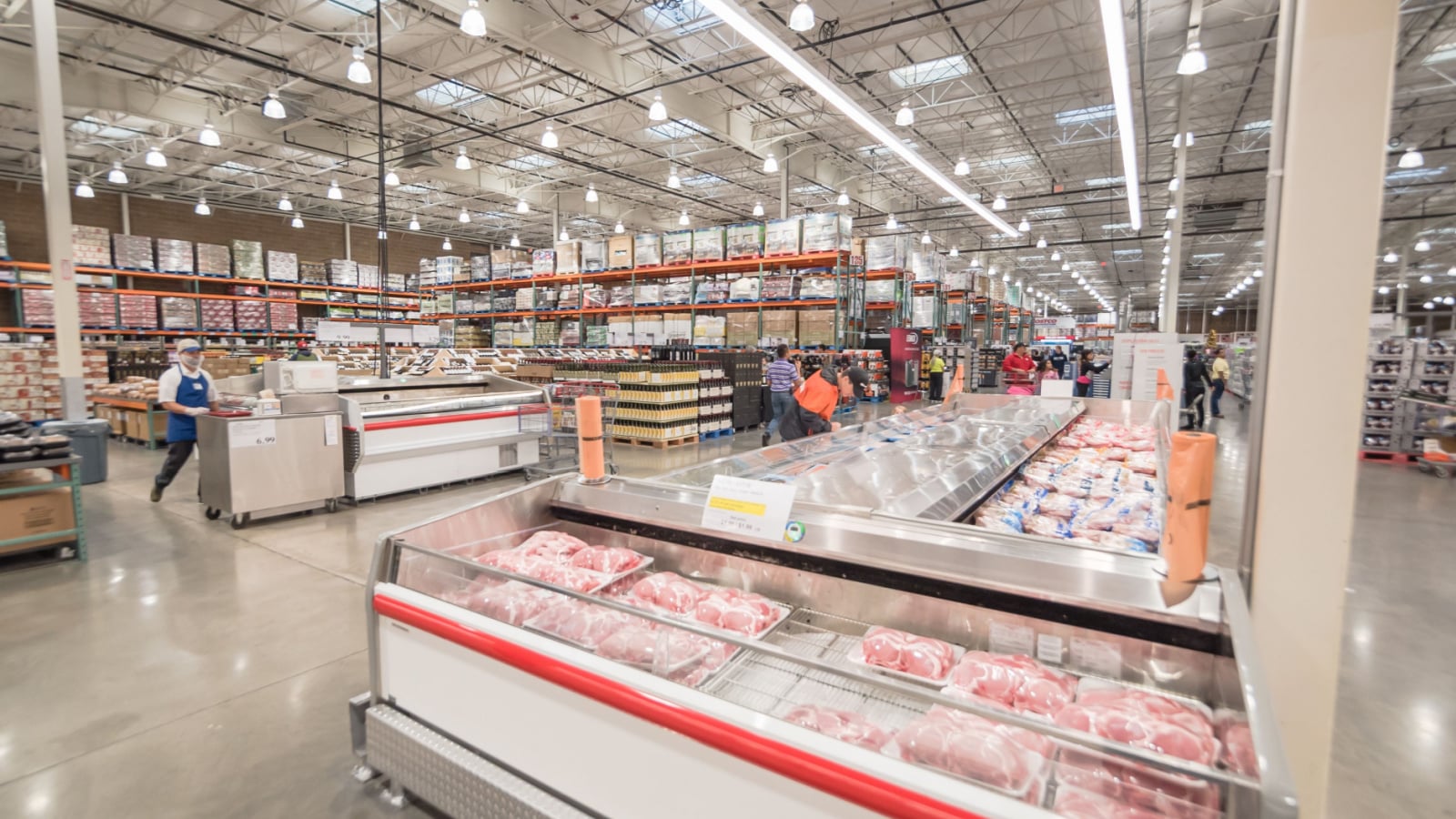
Meat wholesalers sell primarily to grocery stores and restaurants. But most will sell to the public as well. You can get quality meats guaranteed to be priced lower than your supermarket since there’s no retail markup involved. Your money goes much further at a wholesaler than at a grocery store.
Call and ask about selling directly to consumers, prices, purchase minimums, if any, and business hours. Since these places mainly serve other businesses that have to load up before their first customer arrives, they’re usually only open from early morning until mid-afternoon.
If you go, bring a jacket. These places are built for meat storage, not a comfortable shopping experience. You’ll basically be walking into a giant meat locker. You also want a cooler in your car for the ride home.
11. Buy a Whole Cow or Pig
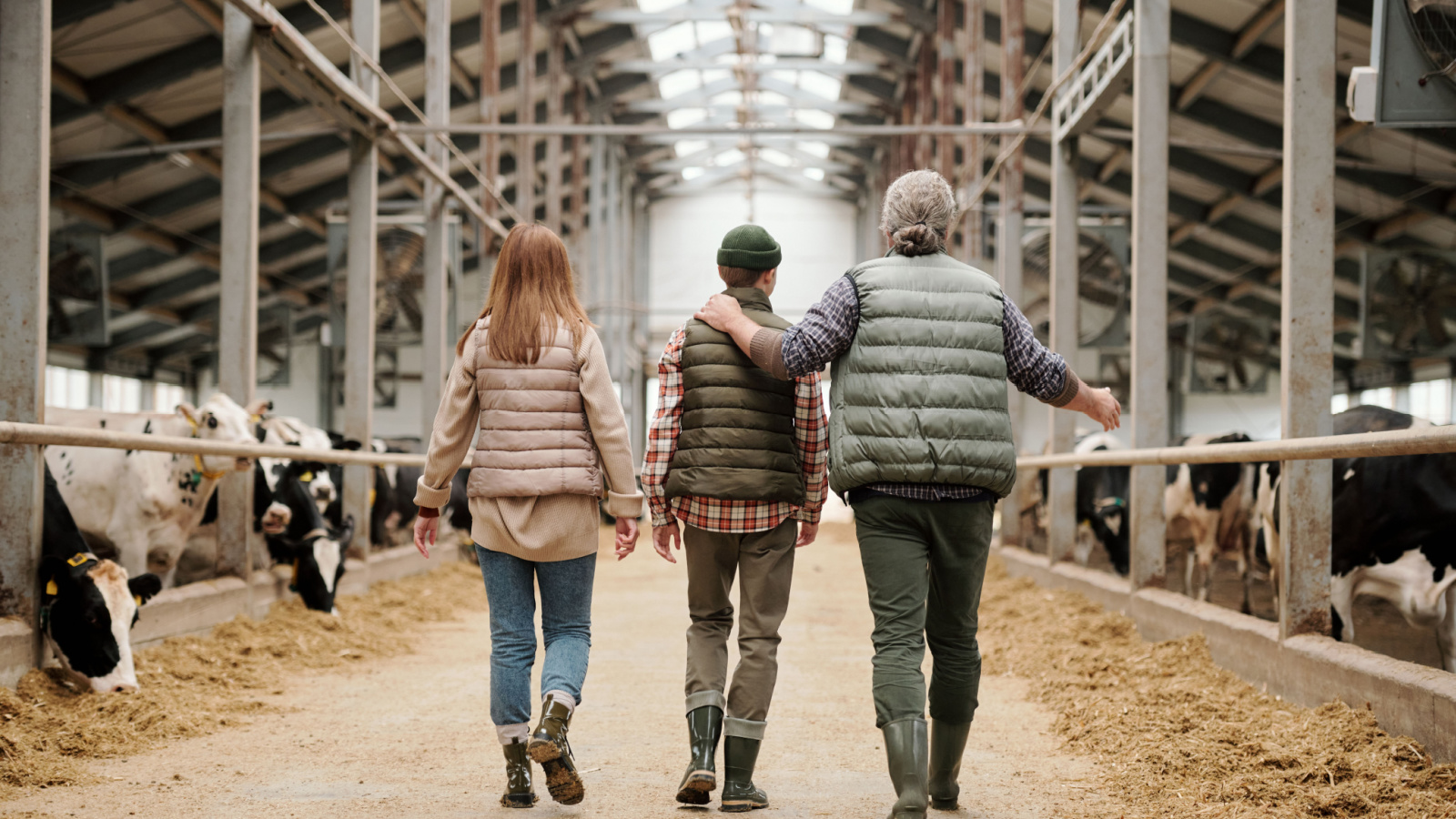
The ultimate bulk meat purchase would be to buy a whole cow or pig. The amount of meat you get depends on the weight of the animal. For an entire cow, you’re looking at around 400 pounds of beef, give or take, after butchering. You’ll get 125 to 150 pounds of pork for a whole pig.
You’ll save money on your ribs, roasts, and steaks with a whole cow—ground beef probably not so much with the wide availability of sale-priced ground beef at grocery stores. The meat you get directly from a farm is usually much higher quality than the shrink-wrapped kind at big box supermarkets. Plus, you get to support your local farmers.
The upfront cost is the biggest downside. A whole cow will cost around $2,000 to $2,500, including butchering, packaging, and other fees. You can lower that by cow pooling or splitting the cost and the meat with a few other families. If you ask around, you may find a farmer willing to sell you a side of beef (half a cow) or less.
Freezer space is also an issue. The freezer compartment of your refrigerator isn’t going to cut it. You’re going to need a dedicated freezer.
12. Save Money on Meat by Repacking and Freezing
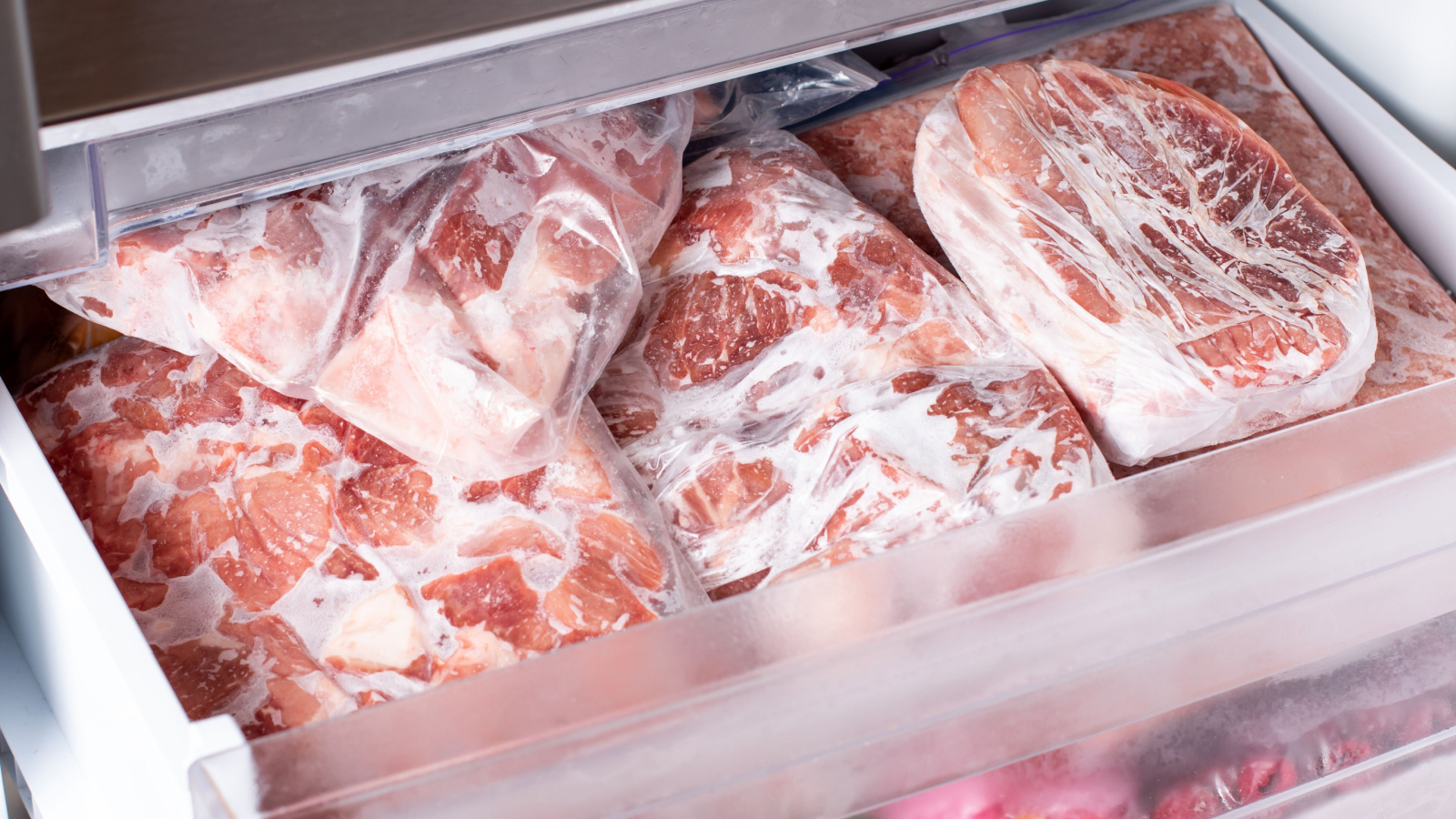
Once in a while, a great deal comes along. It’s such a bargain that it makes sense to load up. But it’s no bargain if your meat spoils gets freezer-burn or otherwise goes to waste. If you’re buying meat in bulk, whether it’s from a farmer, distributor, warehouse club, or supermarket, repacking and freezing are probably in your future.
The key to packaging meat for the freezer and protecting against freezer burn is to prevent your meat from being exposed to air. It’s the best way to go if you have a vacuum sealer. If you know you’ll use it often, pick up an entry-level model at Amazon for short money or something sturdier like the FoodSaver v4440.
Pro tip: make sure you use high-quality bags with your vacuum sealer. Having to double-seal cheapo bags is a waste of your time. Having packages pop open in the freezer is even worse. Try to keep the meat in the bag as flat as possible. Flat packages are easier to store, and they thaw faster.
13. Buy Frozen

Frozen meat is usually much cheaper than fresh. While some argue that fresh is always better than frozen, you might never notice a difference if meat is frozen, stored, and thawed properly.
You should consider buying other frozen meats even if you refuse to freeze a steak. It probably won’t matter if you’re making a big batch of chicken wings to nibble while you and your friends watch the big game, fresh or frozen. Instead of buying previously frozen fish from the fish counter, head to the freezer section and purchase the frozen variety at a significant discount.
14. Grind Your Own Meat
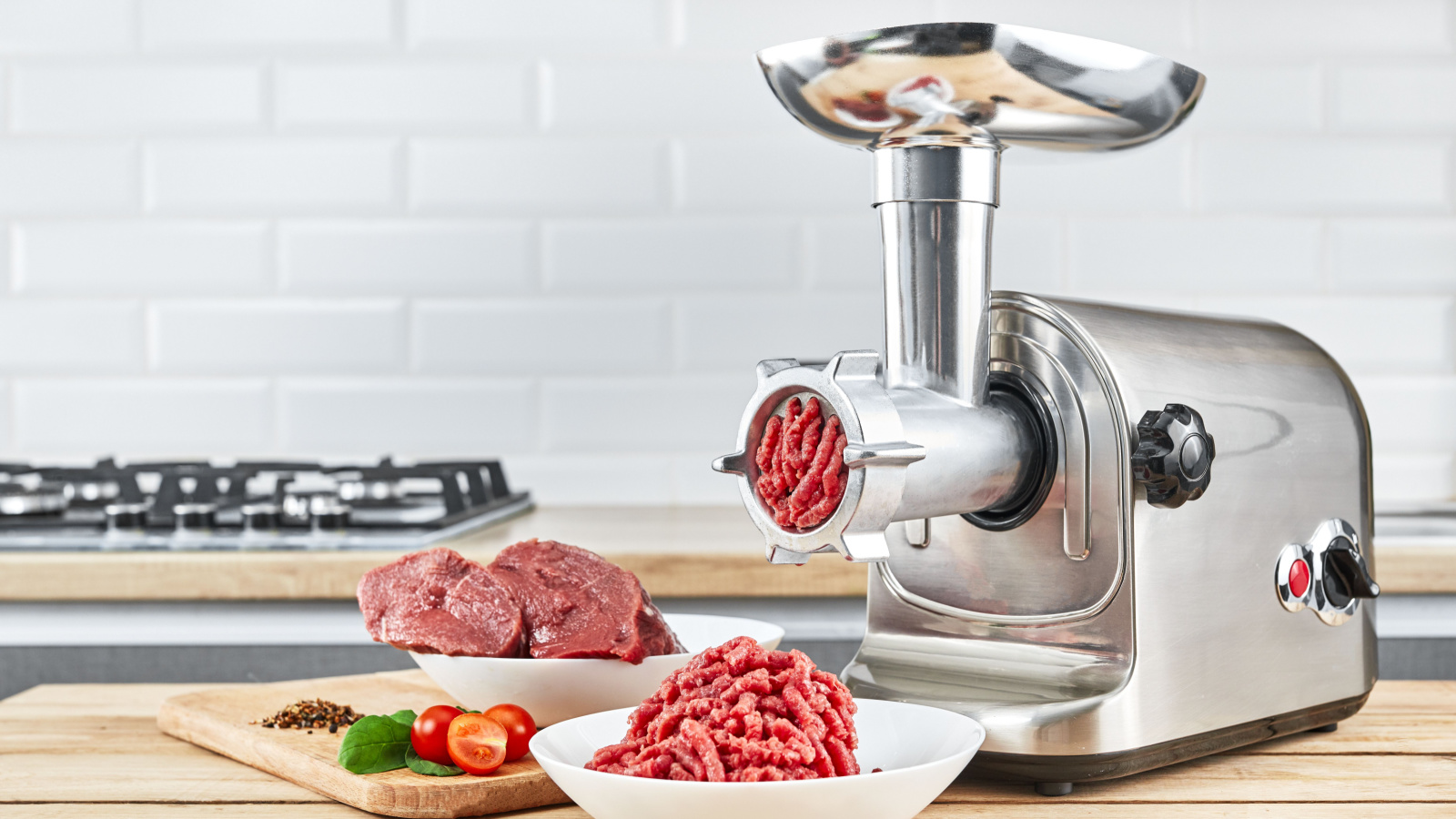
Look for sales on boneless chuck roast and grind the meat yourself instead of purchasing ground beef. You’ll get fresh ground beef at a much-reduced price. To grind it yourself, you can use a meat grinder, a stand mixer with a grinder attachment, a food processor, or a sharp chef’s knife and a lot of patience. Since we already had a stand mixer, we got the food grinder attachment, which you can pick up on Amazon cheaply.
It might be worth the investment if you don’t have a food grinder. You can use it for cheese, nuts, and other stuff besides meat. If you’re on a tight budget, you can go with a hand crank model like this top-rated one, or if you have a bit more to spend, you can get a highly-rated, value-priced electric model.
15. Make Ground Beef Stretch

You can stretch your ground beef and your dollars by mixing cheap filler ingredients like bread crumbs, oats, rice, chopped mushrooms, or beans with the meat before you cook it. A half cup to a full cup of filler per pound is enough to make your ground beef go further. You can use less if you’re worried about your family protesting or altering the taste and texture of the finished dish too much.
Try it with hamburger patties, meatballs, meatloaf, or taco meat. You’ll increase your meals’ nutrient and fiber content, reduce fat, and get more servings per pound. You can always use less meat than a recipe calls for, too. If a recipe calls for a pound of ground beef, try cutting it down to three-quarters or half a pound. Instead of four chicken breasts, use three, or try two cut in half.
I’ve done this plenty of times with meatballs and meatloaf without getting any complaints from my family. I’m pretty sure they didn’t even notice. Give it a try, and if no one says anything, stick with the revised, less meaty version.
16. Say No to Convenience Meats

Any time you buy marinated, stuffed, or portioned meats, you’re probably overpaying for what you’re getting. Premade hamburger patties are very convenient, but convenience comes at a steep price. It’s just not worth it if you’re on a budget. A box of plain hamburger patties would cost me between 15 and 30 percent more per pound than fresh ground beef where I live.
Those “portion control” bags of individually packaged chicken breasts cost about 2 dollars a pound more than the Styrofoam trays of boneless, skinless chicken breasts sitting next to them. Jim Perdue is not your boss. Don’t let him tell you how much chicken to eat. You can exercise portion control on your own for free.
During grilling season, I often see packages of “ready for the grill” premade kabobs. These kits usually consist of a couple of wooden skewers with 2 or 3 little chunks of raw meat, cherry tomatoes, bite-size onion slices, and small green pepper pieces for each kabob. You pay premium meat prices plus a convenience fee for sticks with mostly vegetables and not much meat.
Pick up a family pack of sirloin instead. Buy some veggies on sale and grab some skewers if you don’t have any. Kabob, all you want for much less.
17. Be Your Own Butcher
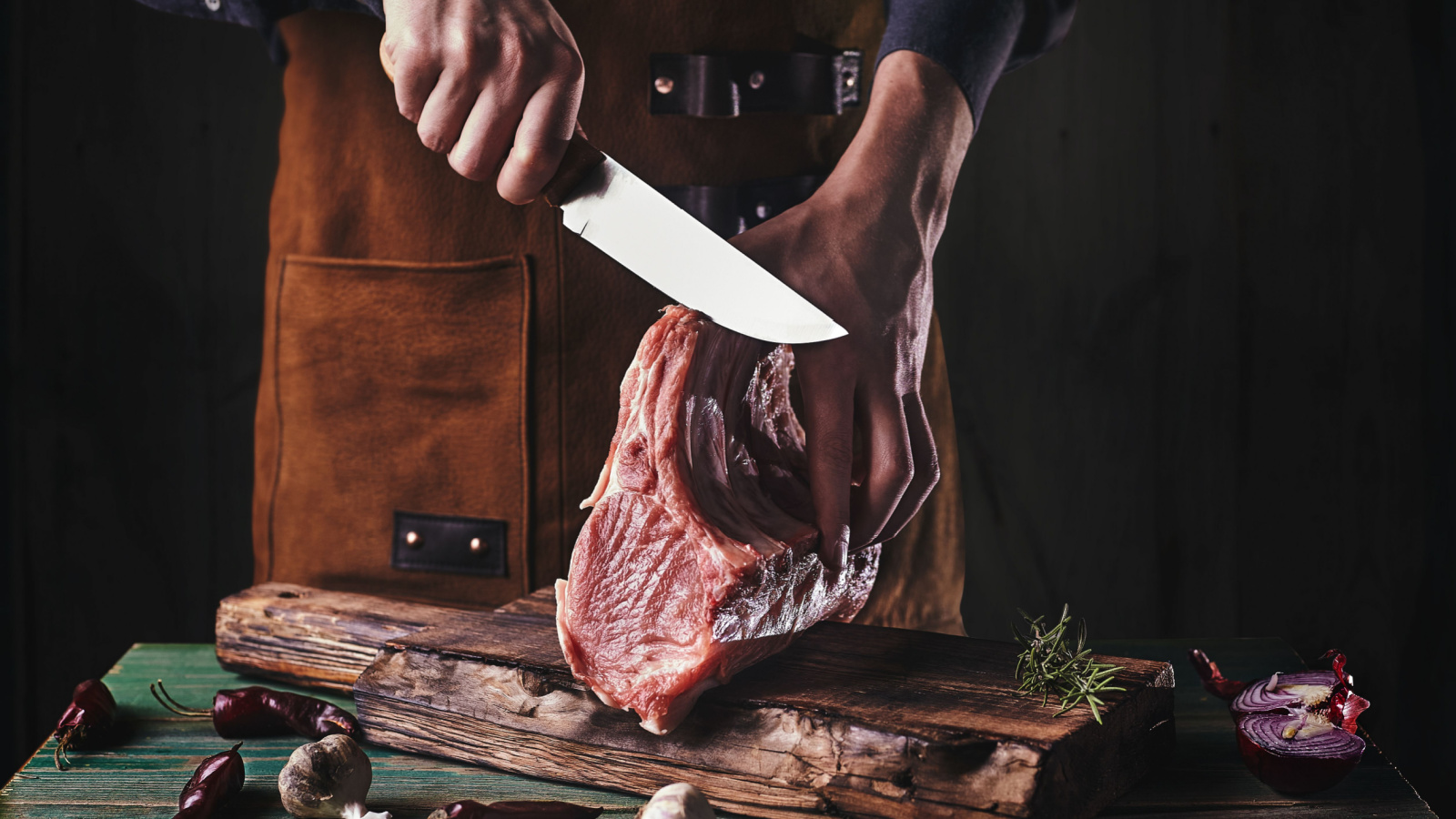
Cutting a whole roast into steaks is cheaper than buying steaks pre-cut. If you can wait for a sale on rib roast, sirloin tip roast, chuck roast, or tenderloin roast, you can get some nice steaks out of it for a much better price than the pre-cut steaks. You can use any leftover trimmings for stir-fries or stews.
The same applies to boneless, skinless, or thin-sliced chicken parts. A whole chicken or parts with intact skin and bones will be cheaper since the work isn’t done for you.
Butchering at home isn’t for everyone, though. I hate touching raw meat, especially chicken. But I hate overspending on meat way more. So I learned a few things about cutting and carving through a combination of the book Whole Beast Butchery and YouTube videos on spatchcocking a chicken. I also ask my local butcher a lot of questions.
I’m not ready to switch careers, but I feel reasonably confident in my meat-trimming and deboning abilities. I also get bones and scraps for broth, stock, and other recipes when I cut up large roasts and whole chickens.
18. Shop Global and Discount Grocery Stores
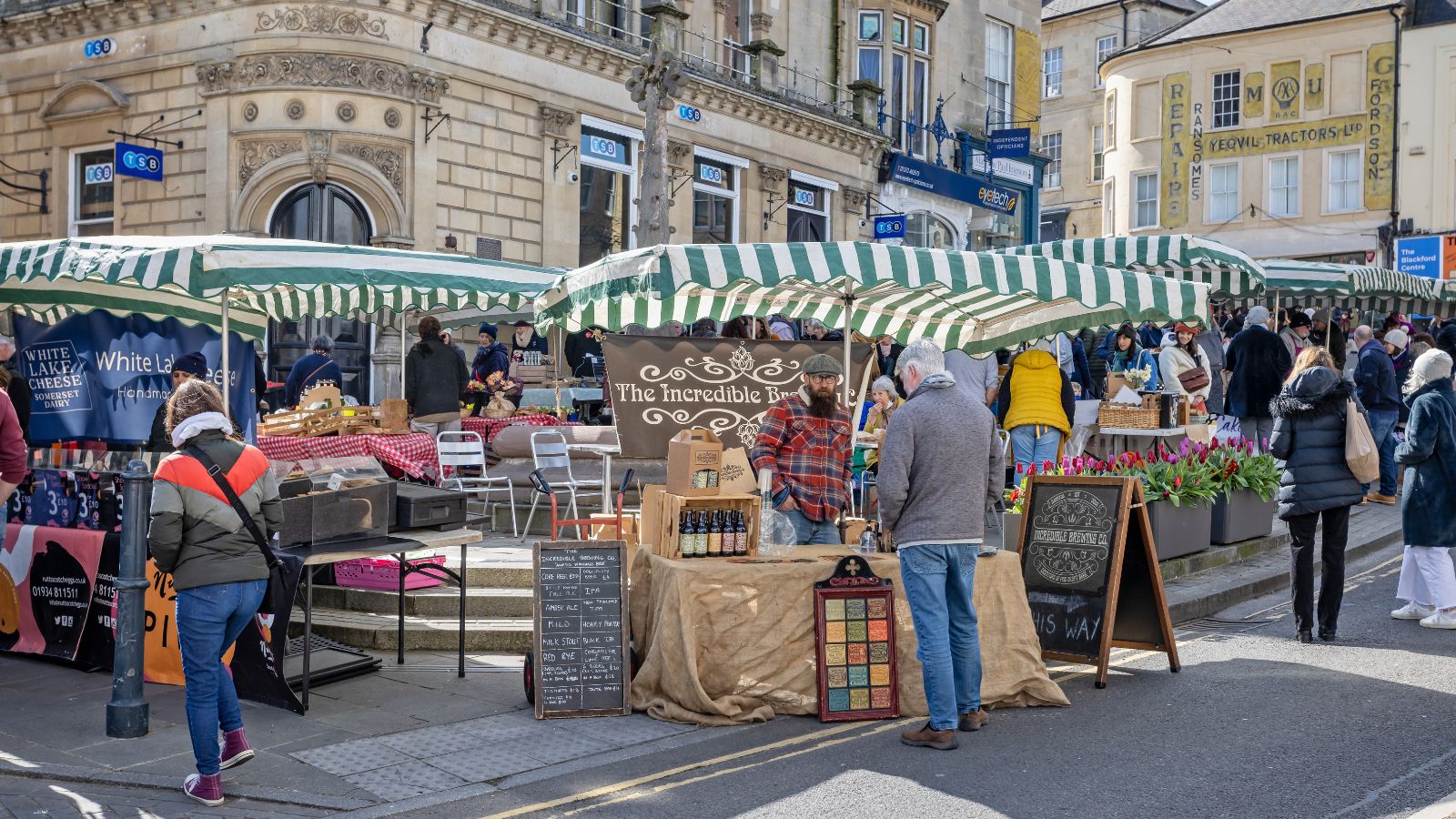
Venture into smaller international grocery stores and discount stores like Aldi or Save-A-Lot to check their prices on meat. You might be surprised at what you find.
I live in a diverse area. The Asian chain H-Mart has a couple of locations near me, and there are smaller, mom-and-pop global markets with great meat prices, produce, and items you won’t see in conventional grocery stores. Don’t be afraid to look around and compare.
Aldi and Sprouts usually have the lowest regular prices on meat near me. Sprouts is a little farther away than I’d like, but I go occasionally. I like to use their prices and sometimes Aldi’s as a starting point for comparing deals at other stores.
19. Find a Good Butcher or Local Butcher Shop
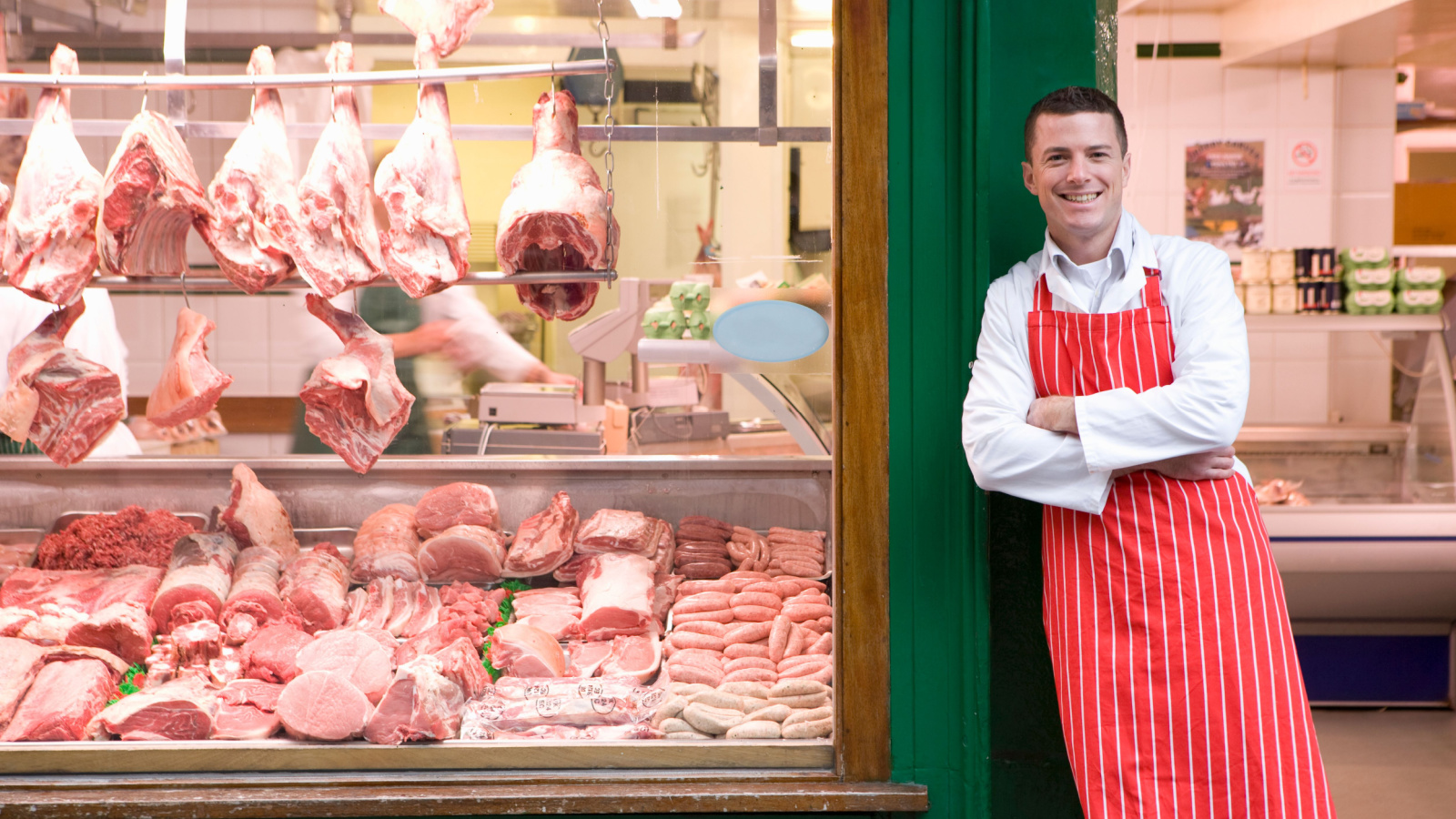
Supermarket meat departments have been killing corner butcher shops for years, but good butcher shops are still out there. An experienced butcher is a great ally when you’re looking to save money on meat.
A good butcher can recommend cheaper cuts to try, advise you on meat swaps for recipes, and explain cooking techniques. Your butcher might also be able to help you with wholesale options or put you directly in touch with a rancher.
I have a small family-run butcher shop pretty close to me. The shop has thrived for over 30 years despite being hard to find, having limited parking, and being located a stone’s throw away from a Walmart Supercenter, an Aldi, and a couple of big chain supermarkets. Sure, their prices are reasonable, and the quality of their products is exceptional, but what makes them successful is the extremely knowledgeable and helpful people behind the counter.
20. Buy Just the Ham Bone
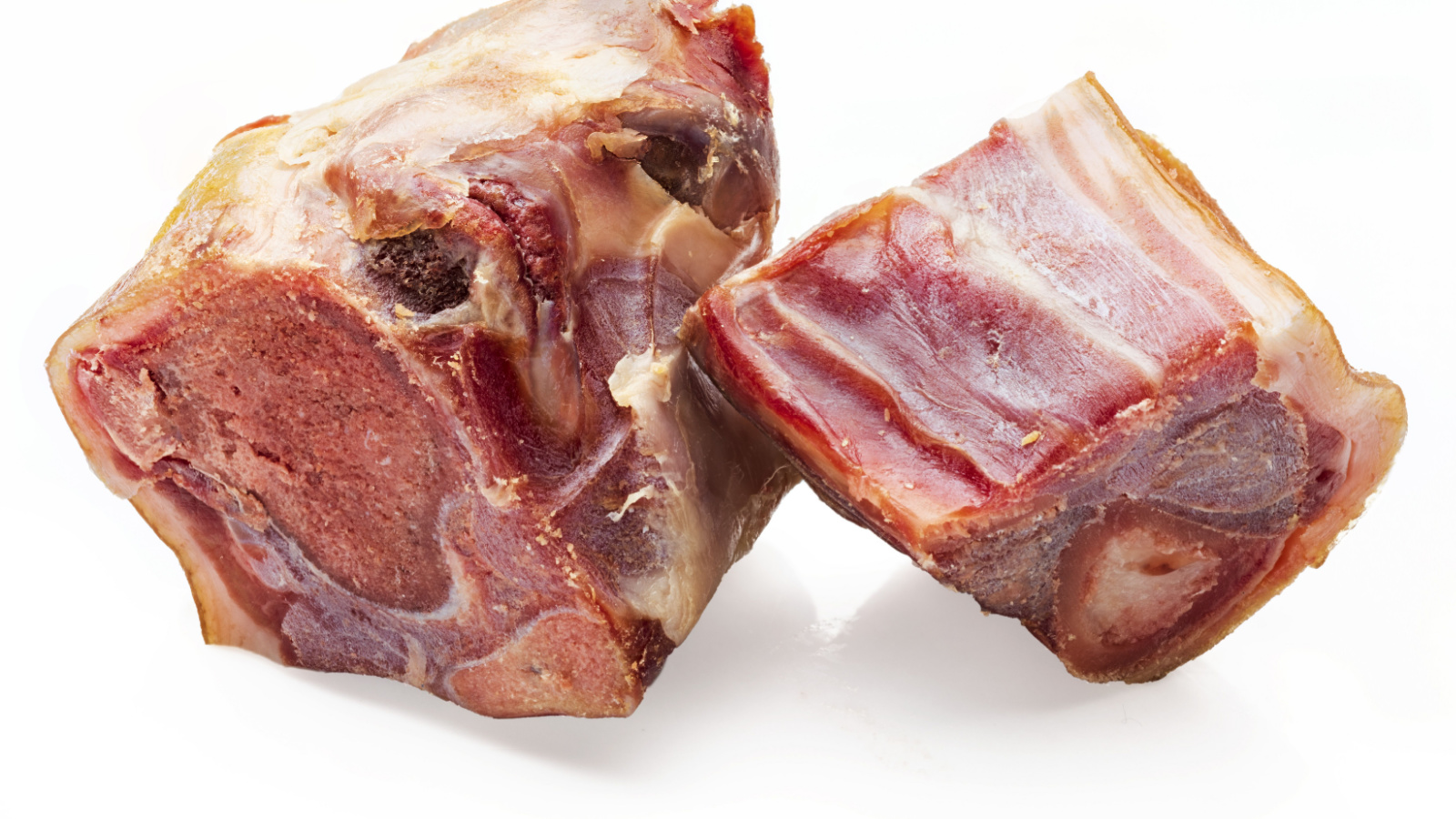
Need a ham bone for soup, stew, or our New Year’s Day favorite here in the south, Hoppin’ John? You don’t have to buy a whole ham if you don’t want to.
HoneyBaked Ham stores will sell you a ham bone pretty cheap. Their ham bones usually have so much ham on them that you can make a sandwich or two or use the extra meat in a recipe.
HoneyBaked Ham has over 40 stores in Georgia, where I live, but if you don’t have one near you, call your local full-service grocery store and ask to be connected with the meat department. Check if they have any ham bones available for purchase.
21. Eat Less Meat

Eating less of it is a surefire way to save money on meat. You can consume less meat without making radical lifestyle changes or depriving yourself of the foods you enjoy. The savings add up with just a few minor tweaks.
The USDA recommends no more than 6oz of meat per day for the sedentary middle-aged male. Say what you will about the wisdom of USDA recommendations, but I don’t think it’s a stretch to say we tend to overdo it with our meat consumption. I often see recipes or recommendations budgeting 8 and 12 ounces of meat per person for a single dish or meal.
Portion control is the simplest way to eat less meat. Try keeping portions between 3 and 6 ounces. Fill up the rest of your plate with veggies or other delicious sides, and you won’t miss it. Avoid cuts like thick chops or T-bones, which are usually oversized and intended to be 1 serving. Split them into multiple portions or opt for roasts, flank steaks, or other cuts where you can easily control the portion size.
If you want to go the extra mile toward reducing your meat consumption, consider having one or two weekly meatless dinners. You could also participate in Meatless Monday. Meatless Monday is a global movement that encourages people to reduce their meat consumption one day a week. Doing so could result in a healthier you, a healthier environment, and a healthier bank account.
The Bottom Line
Saving money on meat can significantly lower your grocery spending. You don’t have to give up meat entirely or abandon all your favorite recipes. You can easily save money on meat by being a bit more aware than the average shopper and slightly more adventurous than the average home cook.
18 Startling Life Lessons Threatening Our Kids’ Futures

Raising kids is like building IKEA furniture without a manual: all those mysterious parts and no idea where they go. We’ve been making some assembly errors regarding the life lessons we’ve been handing down. So, grab your metaphorical Allen wrench! It’s time to tweak, twist, and retighten those wonky lessons we’re dishing out to our future adults.
18 Startling Life Lessons Threatening Our Kids’ Futures
10 Practical Ways to Be Frugal Without Being Cheap

You can be frugal without being cheap by understanding the difference between price and value. A cheap person cares only about getting the lowest price. Frugal people look at price as one factor that determines value.