Disclosure: This post may contain affiliate links, meaning if you decide to make a purchase via my links, I may earn a commission at no additional cost to you. See my disclosure for more info.
Standard zoo animals like giraffes, lions, flamingos, and polar bears are amazing to see up close or even on nature documentaries. But it’s even better to see an animal you never knew existed before and learn about its eccentricities. These curious creatures often live far from public view, and this list details some of those animals you’d probably never see in a zoo, as shared by zoologists and biologists on a recent message board thread.
Saiga Antelope

“The first time I saw one, I thought it looked like something from Star Wars,” said one commenter. The characteristic bulbous snout, soft, lightly colored fur, and long ridged horns definitely resemble something you’d see in George Lucas’ sci-fi universe. Saiga antelopes are native to Eurasia, particularly Mongolia and Russia, and travel in herds among the desert and mountainous terrain.
Club-Winged Manakin
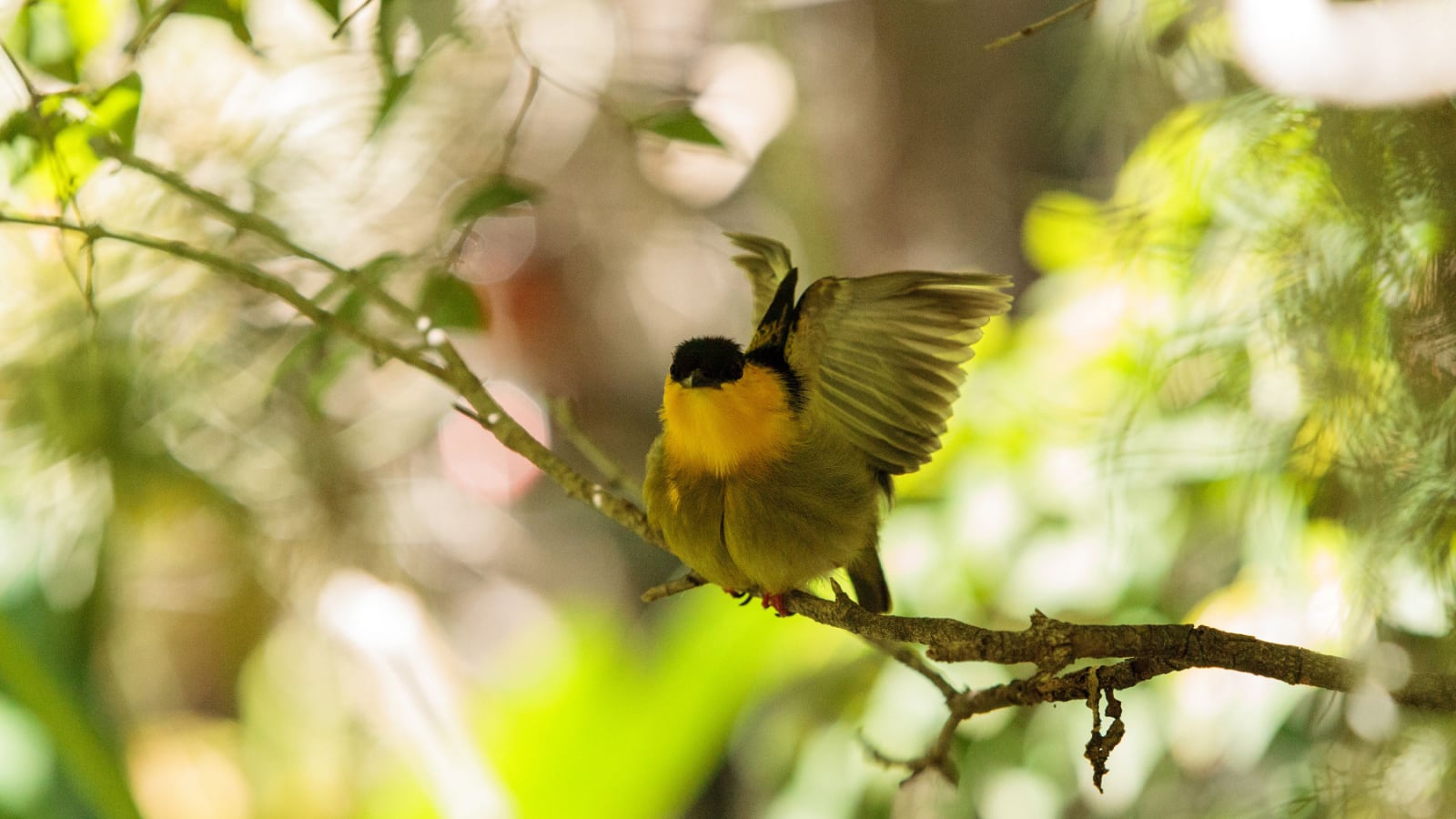
The Ecuadorian and Colombian club-winged manakin is one of the most unique birds in that it makes a pinging sound with its wings to attract mates. If you didn’t know any better, you’d think it was making this sound by chirping, but it actually gets into a squatting position and raises its wings to the side to make this characteristic sound.
Water Deer
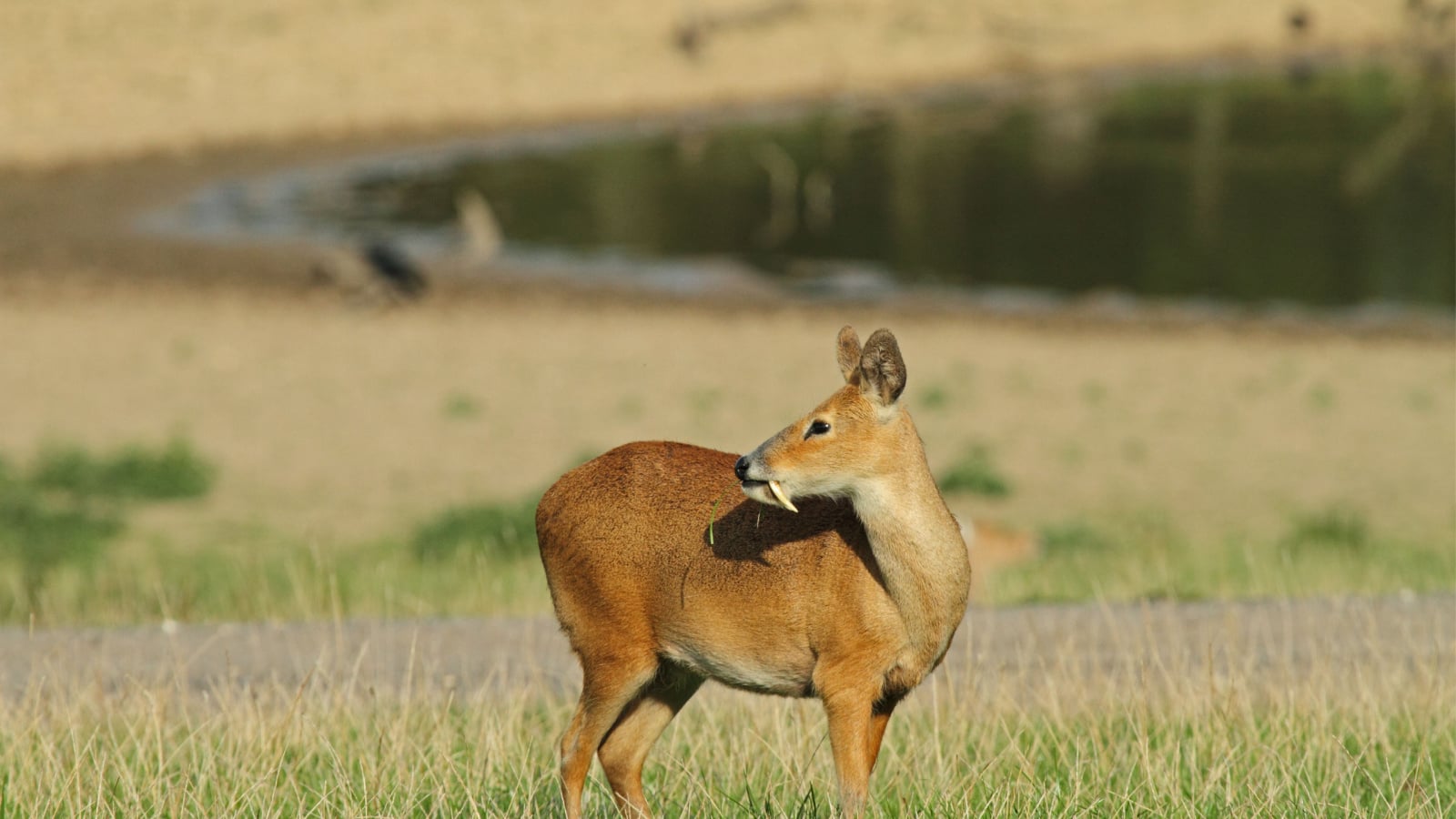
The water deer from China and Korea looks just like a familiar woodland deer, except it has what looks like large vampire fangs jutting out from its mouth, which is why it’s nicknamed the vampire deer. These tusks are somewhat moveable, so the animal can move them out of the way to eat more comfortably and move them forward when fighting.
Blue Sea Dragon
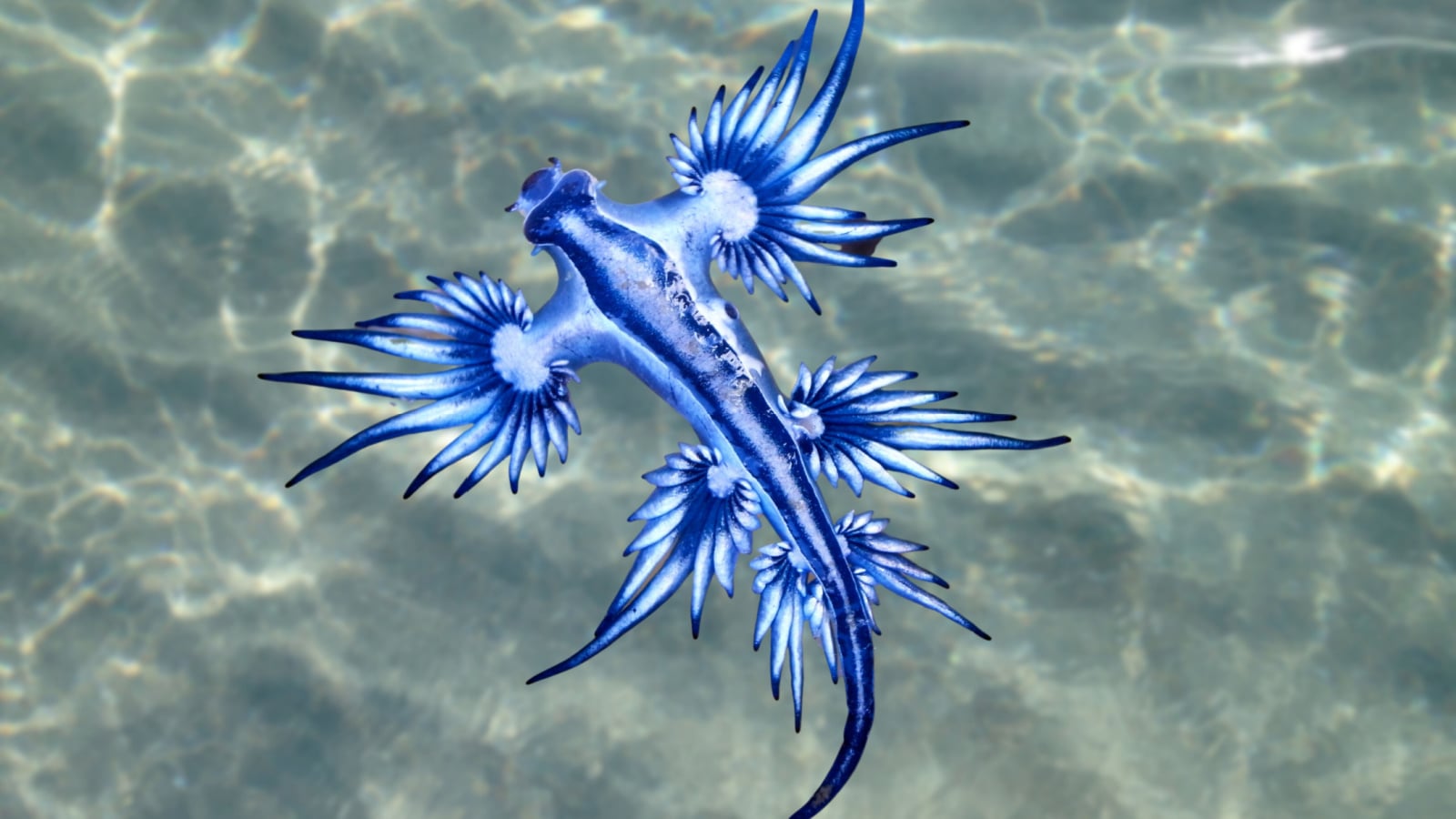
Like something out of a Disney movie, the glaucus atlanticus, also called the blue sea dragon, is one of the more unique sea creatures you’ve ever seen. It has a vibrant silvery blue color and is part of the sea slug family, but don’t let that fool you; these critters can sting predators if they’re feeling threatened.
Sarcastic Fringehead

This saltwater fish can open its mouth wider than its body to bare its sharp teeth as an aggressive territorial display. Seeing its mouth fully open, it looks like something from the Netflix horror series Stranger Things. It’s hard to believe the sarcastic fringehead fish is actually real!
Silky Anteater
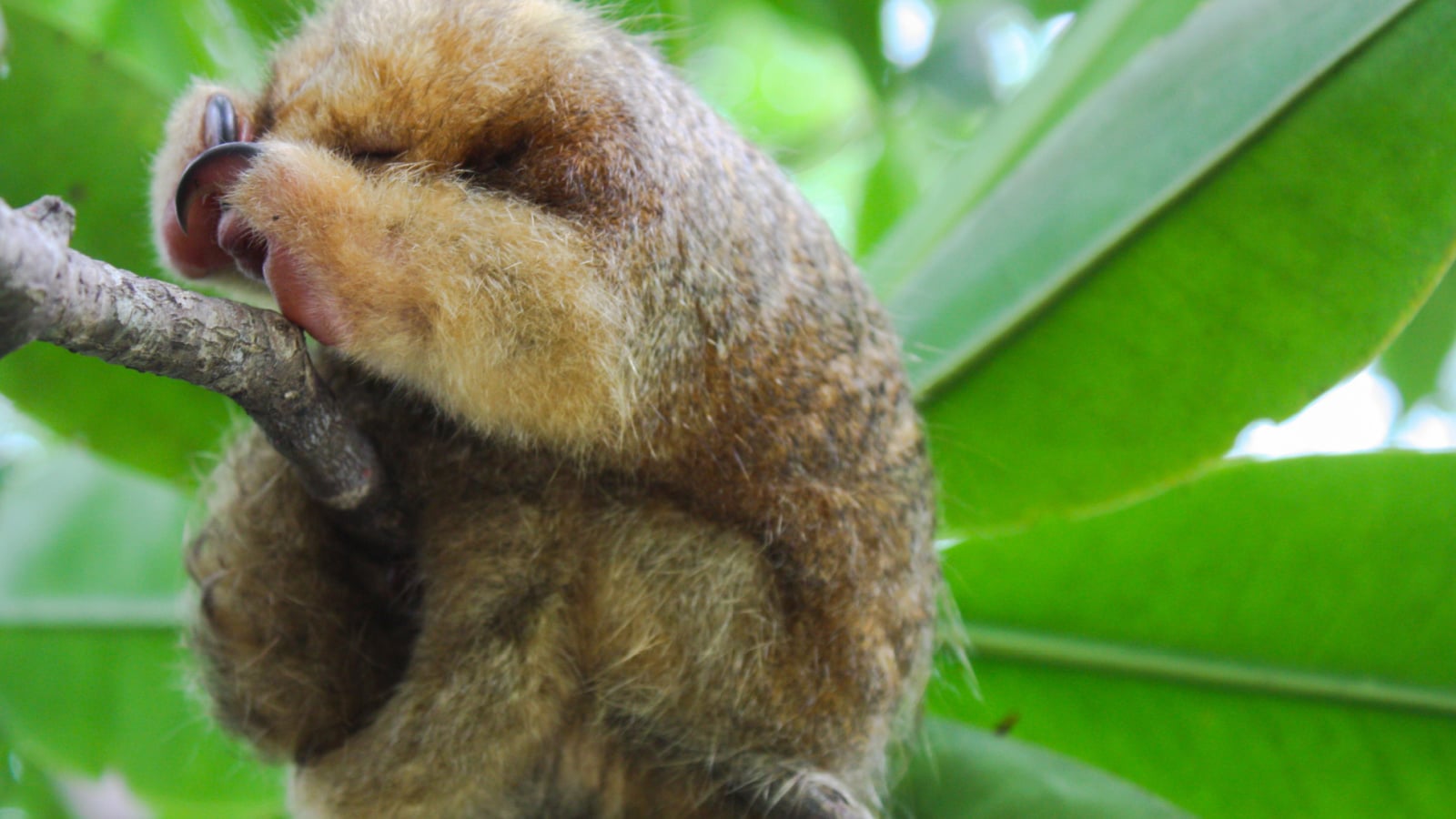
If the last animal was from Stranger Things, this one is definitely a cuddly Pixar animal. With its soft fur, sweet eyes, and small snout, the silky anteater is a tree-dweller native to central and South America. Even though it’s frowned upon, some people capture them and keep them as pets.
Flying Snake

As one user pointed out, the flying snake “…has a specially modified ribcage with skin flaps that open up so it can glide through the air.” Even though these snakes are venomous, the venom is relatively mild and can only harm small prey. I still don’t think Indiana Jones would like them!
Snub-Nosed Monkey

Because of its aptly named snub nose and pale face, many commenters compared this monkey to Lord Voldemort. These endangered animals live in the mountain forests of Asia and come in a golden orangish color and black and white.
Ring-Tail Cat

Ring-tail cats resemble lemurs but are actually more closely related to a raccoon than a lemur or a cat. This animal is native to the southwest regions of the United States. With its sweet face and big eyes, the ring-tail cat looks like it could have come straight from a Pokemon cartoon.
Numbat

The numbat is native to Australia and primarily eats insects like ants and termites, so it has a long, slithery tongue, similar to an anteater. This small marsupial is endangered and protected by conservation programs in Western Australia.
Glass Catfish

The glass catfish, also known as the ghost catfish, is an almost entirely see-through fish. Remarkably, because of their transparent bodies, you can visibly see the glass catfish’s spine and organs and their heart beating using a magnifying glass.
Amazonian Giant Centipede

Looking like something out of a horror film, the Amazonian giant centipede is the largest centipede in the world, growing up to ten inches long. As if it didn’t look creepy enough, its first two legs are actually claws that can deliver venom.
Caecilian

“Caecilians are amphibians, so they’re related to frogs and salamanders, but don’t have legs…Many of the roughly 180 species of caecilians are small and could be mistaken for worms. The largest species of these animals are aquatic and can get to be close to 5 ft long,” said one user.
Mimic Octopus

The mimic octopus is aptly named because of its ability to camouflage itself to look like its surroundings. It can even impersonate other marine animals. This incredible creature is native to the Indonesian waters of the Pacific Ocean and was able to evade discovery until 1998 because of its uncanny ability to hide.
Okapi

Because the okapi looks a little like a zebra and is the only other animal in the giraffe family, it’s nicknamed both the forest giraffe and the zebra giraffe. Like a giraffe, this remarkable hoofed animal also has a long, dark tongue to help it chew greens and large ears with excellent hearing.
Bobbit Worm

The Bobbit worm is something out of a nightmare. Not only does it grab its prey with its sharp teeth by popping out of its underwater sand burrow, but it can also grow to be ten feet long. This sea creature is usually found in the Pacific Ocean near Indonesia and has an iridescent exoskeleton.
Source: Reddit
Generational Shift: 18 Classic Cars Loved by Boomers, Snubbed by Millennials

In the world of automobiles, some cars are timeless, forever etched in the minds and hearts of those who drove them. But generational shifts in taste and values can lead to once-beloved vehicles being relegated to the shadows. Let’s revisit 18 classic cars adored by Baby Boomers but often overlooked by Millennials.
From Boom to Bust: 18 States on the Brink of Financial Ruin—What Went Wrong?

We’re embarking on a financial roller coaster ride through 18 states, and it isn’t the fun kind. We’re talking about states having to check under the mattress and behind the couch cushions for extra change. These states are trying to balance their budgets, but the numbers aren’t increasing. Why are they skimming through their wallets like they lost a 20-dollar bill? Let’s find out!
Avoid These 19 Pointless Expenses When Living Paycheck to Paycheck

Living from paycheck to paycheck puts one in a dangerous financial bind. It’s more prevalent than you can imagine. According to a survey by CNBC, more than half of all Americans (58%) live paycheck to paycheck. When money is tight, it’s crucial to pinpoint and cut out wasteful expenditures that eat away at your hard-earned savings.
Avoid These 19 Pointless Expenses When Living Paycheck to Paycheck