Disclosure: This post may contain affiliate links, meaning if you decide to make a purchase via my links, I may earn a commission at no additional cost to you. See my disclosure for more info.
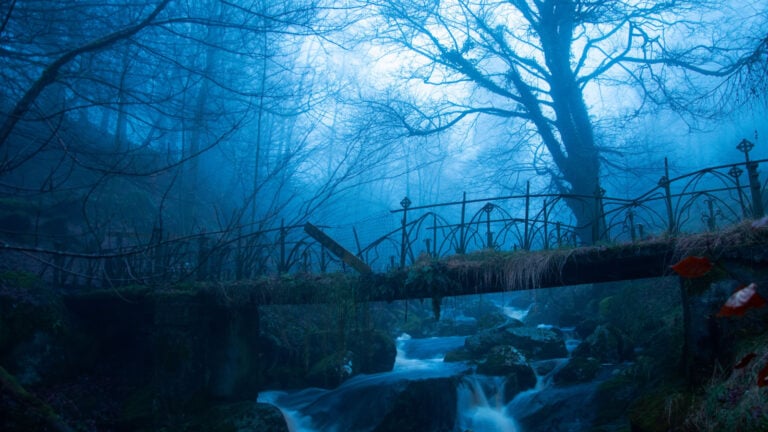
Mysterious places dot the world, hiding in plain sight yet remaining largely unexplored. Far from the usual tourist trails, they are full of secrets and unheard-of histories.
The most captivating destinations lie beyond the edges of maps, where wild speculations begin, and intriguing facts elude both scientific explanation and the grasp of widespread knowledge.
These lesser-known spots, usually hidden from the common gaze, offer scientists and travelers authentic experiences and a true sense of discovery. What secrets do they keep? Let’s travel and explore these enigmatic locations.

Mysterious Places: The Underwater Forest of Kaindy Lake, Kazakhstan
High in the Tian Shan Mountains, Kaindy Lake is a marvel of nature. Formed by a landslide triggered by an earthquake in 1911, the lake submerged a forest, preserving the trees in its cold waters.
Research from the University of Sheffield reveals these submerged trees are more than a historical curiosity. They play an essential role in the lake’s ecosystem, offering food for fish and shelter for aquatic organisms, thus contributing to the lake’s biodiversity.
The study also highlights that they help maintain clear water by absorbing nutrients that would otherwise lead to excessive algae growth. Such ecological function ensures the lake’s pristine condition, providing an unspoiled environment for visitors.
Another study from the Turkish Journal of Earth Sciences uncovers a fascinating link between the formation of Kazakhstan’s Lake Kaindy and the 1911 Kemin earthquake.
The analysis of growth rings from the submerged Schrenk’s Spruce trees suggests the lake formed right after the earthquake, with the narrowed rings indicating the environmental struggles that followed for decades.
Kaindy Lake is a testament to nature’s adaptability, where catastrophic events give rise to new ecosystems that thrive in unexpected environments.
The Catatumbo Lightning, Venezuela
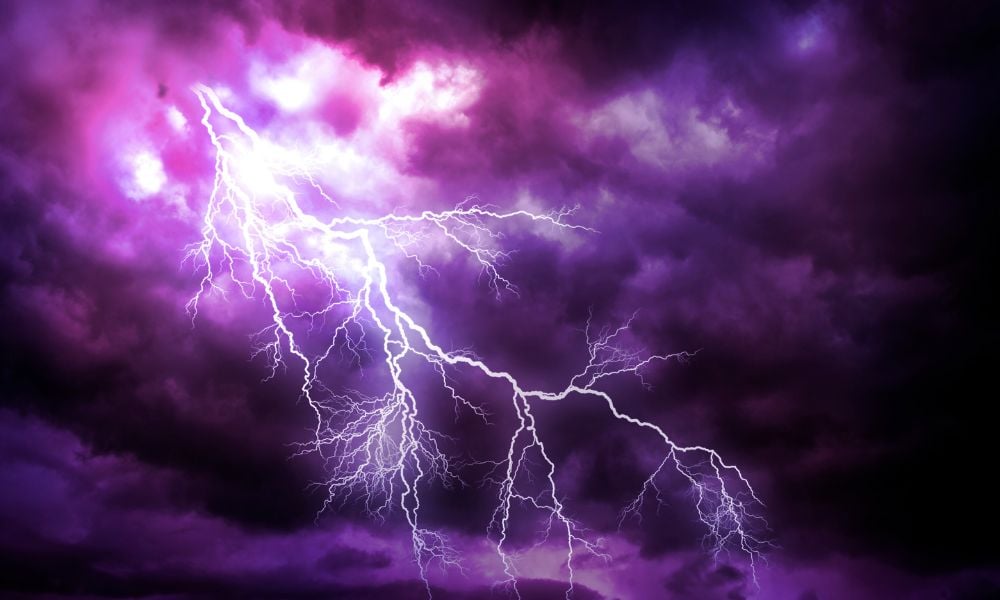
The Catatumbo Lightning graces the skies above the convergence of the Catatumbo River and Lake Maracaibo in Venezuela. This extraordinary display of nature’s fireworks is a significant natural producer of tropospheric ozone.
Over the lake, an astonishing light show unfolds with a frequency unmatched anywhere else. For an average of 140 to 160 nights annually, the night sky comes alive with an intense electrical ballet, lasting up to 10 hours and generating as many as 280 flashes per hour.
According to a study from the Journal of Atmospheric and Solar-Terrestrial Physics, this region exhibits the highest frequency of lightning in the world.
The intricate mix of mountainous landscapes, water bodies, and specific climatic conditions sets the stage for this unparalleled natural light show.
Despite its predictability, the Catatumbo Lightning still puzzles scientists. Located in one of the world’s most mysterious places, this phenomenon offers crucial insights into atmospheric physics, helping to explain why these electrical storms occur so often and their effects on the Earth’s atmospheric chemistry.
By generating large quantities of ozone, it actively participates in the delicate balance of the planet’s atmospheric layers, influencing air quality and weather patterns far beyond its immediate surroundings.
The Sailing Stones of Death Valley, United States
In the desolate beauty of Death Valley, California—one of the world’s most mysterious places—a peculiar and captivating mystery unfolds on the cracked surface of the Racetrack Playa. Here, the Sailing Stones, some weighing hundreds of pounds, etch their paths across the flat desert floor, seemingly defying the laws of physics.
The stones leave behind trails stretching hundreds of feet as they move without human or animal intervention, creating a fascinating natural phenomenon. The trails twist and turn, sometimes aligning next to each other or branching off in different directions as if each stone moves on its own.
An article published in the Plos One journal about this enigma revealed the remarkable process: thin sheets of ice, mere millimeters thick, form around the stones as the playa floods.
When the morning sun softens ice and gentle breezes blow, these now-floating ice panels nudge the rocks gently. They begin their slow crawl across the surface, pushed by the wind-driven ice sheets at speeds up to five meters per minute.
This combination of natural elements—water, ice, and wind—creates a subtle yet powerful energy capable of propelling the stones on their paths, leaving behind a record of their journey in the form of long, linear grooves.

The Great Zimbabwe Ruins
The Great Zimbabwe Ruins rise as a testament to a vanished empire. As one of Africa’s most mysterious places, its towering walls and scattered stones mark the remnants of a once-bustling city at the heart of a mighty civilization from the 11th to the 15th centuries.
Today, tourists from across the globe travel the same routes merchants once used for trading gold and ivory. The Great Enclosure, an architectural marvel with its imposing walls, shows the engineering brilliance of the Shona people, who constructed this stronghold with precisely stacked stones.
Each structure and artifact tells a tale of power, wealth, and remarkable skill. The Great Zimbabwe Ruins are the lasting symbol of Zimbabwe’s cultural heritage.
The ruins stretch across nearly 1,800 acres. The famous Conical Tower, a cylindrical stone structure, remains a mystery, fueling speculation and study. These stones have witnessed the rise and fall of leaders, the bloom of culture, and the daily lives of a society that thrived centuries ago.
The Salar de Uyuni, Bolivia

Spanning more than 10,000 square kilometers, the Salar de Uyuni is the world’s largest salt flat. This remarkable place is a natural canvas that reflects the sky perfectly during the rainy season, blurring the line between earth and heaven.
This salt flat is also a treasure trove of lithium. It is a critical component in the batteries that power a wide array of electronic devices and electric vehicles, marking this location as a significant point of interest for global resources.
Yet, the true magic of the Salar de Uyuni may lie in its microbial inhabitants. A study from the Microbiological Research journal focuses on the extraordinary microbial diversity found within this hypersaline environment.
The brines, rich in lithium and boron, create a unique habitat where specialized communities of microbes, known as ‘haloarchaea,’ flourish. These extremophiles survive and thrive in very salty conditions, testing the limits of life’s endurance.
Finding these microbial communities also notes the Salar de Uyuni ecological value. The presence of such extremophiles suggests that the flats are complex ecosystems with organisms that have adapted to some of Earth’s most challenging conditions.
Exploring the world’s most mysterious places reveals the tenacity of life and its diversity. These unique locations are treasuries of hidden knowledge, promising discoveries that deepen the understanding of the planet across time.